My Friends by Hisham Matar – Democracy is a slow process of stumbling to the right decision instead of going straight forward to the wrong one.

My Friends, published 2024, is a novel by Hisham Matar, long-listed for the Booker Prize.

Khaled, the narrator, is not an action hero by any stretch of the imagination. He’s a quiet, intellectual young man, a Libyan student studying English at Edinburgh University in the mid 1980s. At that time I was a similarly less-than-heroic student studying English at Warwick. Sometimes people would knock at the door of my campus study bedroom, asking me to go on demos. I would politely decline. Khaled’s instinct would be to do the same. However, in April 1984, his more radical friend, Mustafa, persuades him to attend a demonstration outside the Libyan embassy in St James’s Square, London. You can see why Khaled might take a deep breath and decide that attending one demo might be the decent thing to do, given the recent execution of student activists by the Libyan government.

Inexperienced in the ways of protests against dictatorial regimes, Khaled and Mustafa get to London and realise they need some kind of face covering to protect their identities from Libyan spotters. After locating a couple of black polyester balaclavas in a sex shop, they make their way to St James’s Square. Khaled plans to just do a quick bit of shouting, before slipping away to find lunch in China Town.

He doesn’t get to do this because someone inside the embassy points a machine gun out of a window and starts shooting, wounding eleven protesters and killing a young police woman called Yvonne Fletcher. I remember watching reports on the news.

This part of the book is very dramatic, particularly scenes at Westminster Hospital where a badly injured Khaled is taken. His life changes from this point on. He is a marked man and cannot go home to Libya. Politics is not some student game anymore. How will Khaled and his friends react? What form will their ‘growing up’ now take?

Responses vary between joining armed militias, to vaguely hoping that if only people would read more books and let things work out for themselves, life would go better. This all takes place against the backdrop of London, presented as a natural place of exile, a place of buses to Marble Arch, of fog and cosy restaurants.

My Friends does not have a prescription for good government, or how we should respond to bad government. What it does is personify different prescriptions in the characters of a group of devoted friends, who are both uneasy, and deeply admiring, of each other. The relationship is the thing, rather than one of them winning. Ultimately, however, I would point out that the narrator of this novel, the hero if you like, is the one who lives a bookish life in London. He is the novel’s quiet central government. Chaos rages around him. And if there is a lesson in My Friends, it might have something to do with that.
Headshot by Rita Bullwinkel – Boxing as a Girls’ Clapping Game

Headshot is a novel by Rita Bullwinkel published in 2024, long listed for the Booker Prize. The action takes place over two days at Bob’s Boxing Palace in Reno Nevada, where the eight best under-eighteen girl boxers in America take part in the Daughters of America Cup.

Already my description is a bit off, which reflects how tricky this novel is to pin down. It’s not really confined to two days. The disembodied narrative spins off into past and future. We find out about the competitors’ childhoods and later lives.

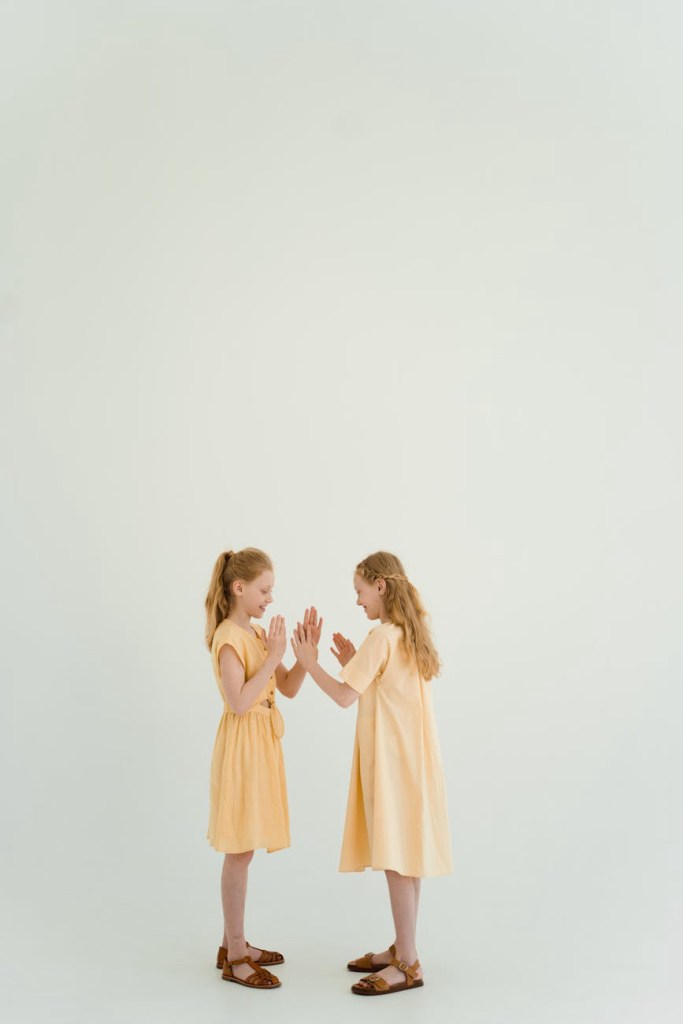
This is a book about boxing. The girls are clearly defined as individual combatants. But the book really gets interesting in using boxing as an unexpected metaphor for togetherness, and feminine togetherness at that. Boxing is a sport where you look your opponent in the eye. There is no sense of running your own race in boxing. You are in it with your opponent. From that sense of robust sharing, there is a comprehensive breaking down of demarcations, categories, individuality, to explore a shared experience. Boxing is paralleled with girls’ clapping games, hair braiding. It’s cleverly done, using a tough sporting event in a grubby boxing venue to explore the boxers’ lives, and then life in general as a battle that is also, somehow, a collaboration.

I came out of the book with an odd feeling of reassurance that people’s endless capacity to fight is combined with an endless capacity to work together. In the wider boxing match of life, which all the girls have come from and will return to, there is the same opportunity. I admired the book. It is both a challenging punch in the eye with its originality, while still capable of putting a friendly arm around your shoulder. Rita Bullwinkel is a professor of literature at Leipzig University – and maybe this sense of challenge combined with collaborative help is a good one to describe teaching. I hope I was a good student in this boxing class.

Glorious Exploits by Ferdia Lennon – Forgiving the Unforgivable

Glorious Exploits is a novel by Ferdia Lennon, published in January 2024. It is set in the aftermath of Athens’ invasion of Sicily in 412 BC, during the Peloponnesian War. Defeated Athenian soldiers have been rounded up and herded into quarries – concentration camps essentially – near the city of Syracuse. Two local, unemployed potters, fans of Athenian theatre, get it into their heads to find actors amongst the prisoners who would be willing to stage a production of two plays by Euripides. The story follows their efforts to stage the plays, and ultimately find friendship with the enemy.

Through the lens of the present day, past culture often takes on a shiny polish, becoming the sort of thing studied in schools and universities. In their own times, however, posh classics were still in the category of show business. How to recreate that more authentic, contemporary feel? Glorious Exploits takes the initially surprising decision to have its characters speak in Irish vernacular, where good things are ‘cracker’. After about a chapter I just accepted that Fifth Century BC Syracuse was like an episode of Derry Girls. It worked very nicely in setting the right tone, a way of correcting the focus of that lens of the present.

So, the two potters, after some ups and downs, actually manage to stage Euripides’ Medea, and The Trojan Women in an improvised quarry theatre. Inevitably, in working together, Sicilians and Athenians gain an understanding of each other.

And this is where the Euripides plays themselves become interesting. While the process of staging the plays fosters a feeling of forgiveness and togetherness between the Athenians and Sicilians involved, the plays themselves are definitely not fluffy. Euripides is not the sort of writer to give advice about being kind. In fact, his plays show people at their most unforgiving. In Medea, the hero Jason comes back from an adventurous trip having won the Golden Fleece, a success that owes much to his gifted wife Medea. And how does he thank her? By planning to divorce her and marry a younger woman. Medea is not impressed and plots terrible revenge. She murders Jason’s girlfriend, the girlfriend’s father, and even her own children, as a way of hurting Jason in the most profound way possible. The same pitilessness is evident in the next play on this dark double bill, The Trojan Women. After conquering Troy, victorious Agamemnon takes Cassandra home as his trophy wife. His old wife Clytemnestra responds by murdering both her old husband and his new wife.

These are plays of vengeance not understanding. But that might be the point. During the performance we see the audience encouraged to see situations from the point of view of the most entrenched positions.

One moment I’m with Jason, the next Medea, and it swings this way and that, like the battle in the great harbour…’

So we get an unvarnished view of the reality of conflict, where there is no way the combatants will reconcile. And yet looking on, it’s possible to see both sides. Seeing both sides is described in terms of a battle. Maybe the final tragedy is that understanding doesn’t necessarily bring peace. When a wronged Sicilian takes his revenge on Athenians, our understanding of his motivations does not stop him lashing out.

Glorious Exploits is funny, hard edged, and taking its lead from Euripides, relentlessly unsentimental. It does not promise that people will get on and be nice. But like Euripides it does suggest that understanding can be present in the bitterest of divides. A play is like a battle to understand, the argument swinging from one side to the other. If we are destined to face battles, the battle to understand is the best one to fight.