Flesh by David Szalay – a Brilliant Okay Book

Flesh by David Szalay won the 2025 Booker Prize.

This book is apparently very understated. No fancy narrative tricks. No poetic turns of phrase. The central character, István, is a taciturn Hungarian, who we follow from boyhood to old age through the ups and downs of his life. By any objective assessment there are some real highs and terrible lows. And yet, there’s a uniform coolness that accompanies it all.

What was life like in the Hungarian army during the Gulf War?

“It was okay.”

“Is it nice living in a mansion when things look up?”

“Sure.”

The same tone answering questions about post traumatic stress from a therapist as that used answering questions about a day at the office.

It somehow makes the emotion burbling below the surface more powerful, and also gives relief from emotional extremes. I would say this was a British approach, but it seems the Hungarians are potentially more British than the British, which is maybe why István feels vaguely at home in both countries – not too at home, nothing too extreme, no marching with flags. Ah, for that kind of Britishness, or Hungarianess.

When I read Anthony Powell, I felt his books provided excitement for those who felt life was mundane, while at the same time conferring peaceful reassurance on those going through dramatic times. This book manages the same trick. There is no preaching. Take what you need, leave what you don’t.

I really enjoyed it.
Love Triangle by Matt Parker

Love Triangle is a book by Matt Parker about the history and maths of triangles – mostly the maths.

Never finding maths easy, I’m one of ‘the masses’ to whom Matt says he wants to bring maths. I became interested in triangles not because of Pythagoras, but through planning a novel about a love triangle.

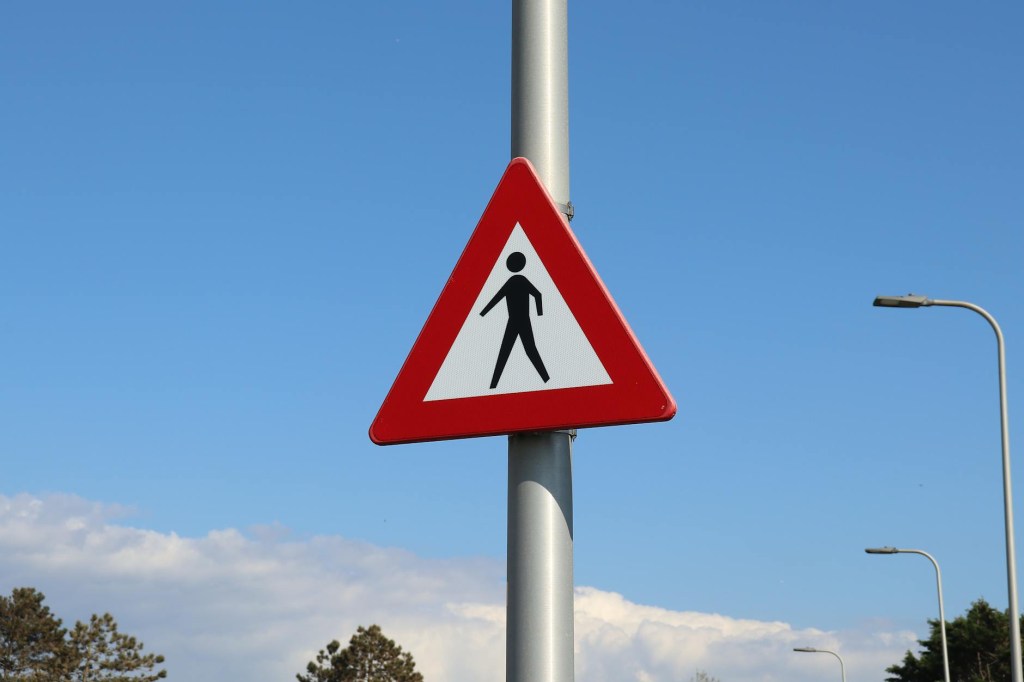
There is no sense of this kind of painful three-sided relationship in Love Triangle. We are mostly in the world of mathematical abstraction, via hot air balloons scaring pigs, and United States presidents revealing secrets about spy satellites by putting classified imagery on social media. There’s one section about art where things started to get interesting, only for the narrative to head off into an odd digression about UK road signs for a stadium, which show a football with mathematically inaccurate hexagons. The author was so exercised about this that he complained to the government. From my non-mathematical perspective I wondered why stop with hexagons? The picture on the sign is two dimensional, when an actual football is three dimensional. And does the picture match the regulation ball size as defined by the FA? Why not just stick an actual football on the sign for maximum precision? I recall an anecdote about Picasso, where someone was giving the artist a hard time about the surrealist portrayal of women in his paintings, producing a picture of his girlfriend as evidence of how they should appear. “And is she really rather small and flat?” Picasso is supposed to have asked looking at the photo.

This book is interesting. The fact that it was hard to follow was no doubt my fault as I’ve always struggled with numbers. But beyond that, I found it kind of… claustrophobic. That might be the word, even when the subject under discussion can be used to measure stellar distances. I would humbly suggest that although Picasso and I have nothing in common, there were moments of sympathy with him in being told to see reality in very particular terms, when other terms were available. No doubt Love Triangle on occasion brings precision to a lazy popular outlook. At other times it felt like it was leading me on an obsessive wander down a dark, cramped, hexagonal alley.

The First Artists, In Search of the World’s Oldest Art, by Michel Lorblanchet and Paul Bahn

This journey through the history of ancient art is not straight forward. Very little of the art remains, researchers make mistakes and disagree with each other, and the development of art seems to ebb and flow, appearing, disappearing before returning again. Also I found it a little difficult to orientate myself amongst references to dating, sometimes using numbers of years ago, mostly using names of historical periods – early, middle, late Palaeolithic, Neolithic, Mousterian, Aurignacian, and so on – lots of looking things up there.

But reading on, a feeling did emerge of people first noticing interesting details about their world, curious shapes in rocks, or scratch marks on cave walls, and then working to tweak them. For example, some enterprising early artist noticed a patch of bear scratch marks on a wall, and then inscribed the outline of a mammoth around them, the scratches becoming the mammoth’s shaggy coat.

And in creating stone tools, their makers seemed to look at the stone they were using, and wonder if some modifications could be made in the interests of beauty. They’d make tools out of rock that was attractive but perhaps more difficult to work than plain, ordinary rock. They would either buy in, or travel to find exotic material. Or maybe they’d make a tool from a rock featuring a fossil. So art began to emerge from pre-existing natural forms, and from the practical business of living.

The first widely used paint was derived from an iron rich clay called ochre. When heated, powdered and combined with water, the resulting red pigment, was used to create images, probably as body paint, and as a nutritional supplement, being rich in iron. Or you might think of it as a very early form of ink, and the pictures created with it as an ancient writing.

This quote from researcher Leroi-Gourhan:

‘At its start, figurative art was directly linked to language, and much closer to writing in the broadest sense than to a work of art; it is a symbolic transposition and not a copy of reality.

So not only is this book about early art, it’s also about the earliest stages of the writing you are reading now.

The First Artists is an interesting book, a bit confusing maybe, which is an expression of the complicated story it tells as much as anything else. Overall, however, I gained a feeling of art not as something that people did in their spare time when more basic needs were met, but as an activity firmly rooted in nature and practicality.