The Three Musketeers by Alexandre Dumas – Three’s a Crowd

D’Artagnan is newly arrived in 1625 Paris. He is a young man with dreams of joining the King’s Musketeers, an elite group of soldiers who guard Louis XIII. But as soon as D’Artagnan rolls into town, some hot-headed behaviour leaves him facing a duel with no less than three Musketeers – Aramis, Athos and Porthos. On cooler reflection both D’Artagnan and the Musketeers think a duel might not be a good idea, but a sense of honour pushes them forward. They are saved and brought together, not by someone coming along to talk sense into them, but by a challenge from rivals, the guards of the King’s powerful counsellor, Cardinal Richelieu.

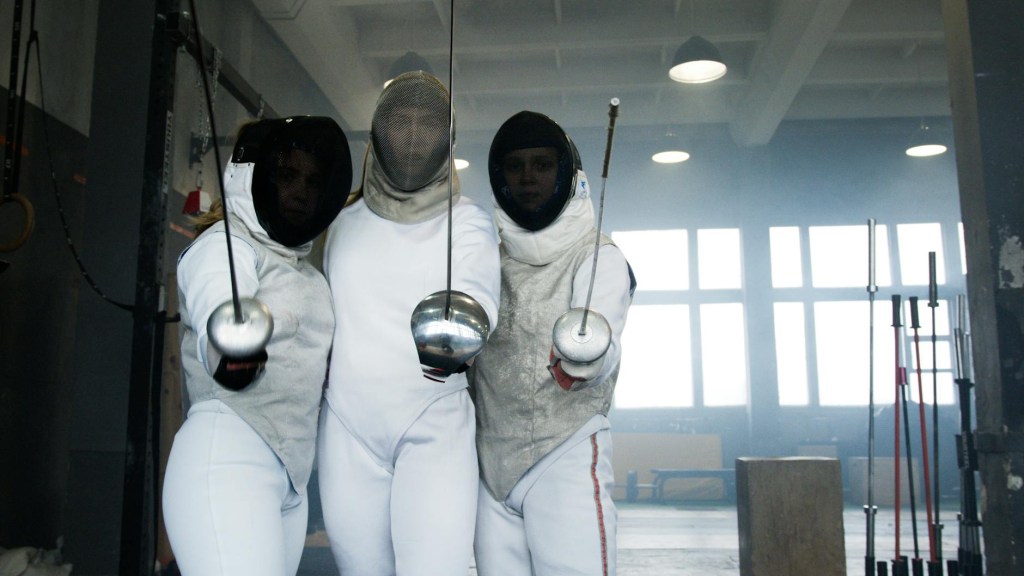
The Cardinal’s guard take much pleasure in pointing out that a duel breaks public disorder laws. So what do the Cardinal’s Guard do to teach these rascally Musketeers the meaning of the law? They fight them, which of course is itself public disorder. The Guards use the law as an excuse for an illegal ruckus. In the fight itself, D’Artagnan takes the side of the same Musketeers he had challenged to a duel. He is not trained in fencing, but because of his inexperience, he proves to be an unpredictable and lethal opponent. If he had known the rules, the suggestion is he would have been less effective.

This fight sums up many of the themes of The Three Musketeers – describing a world where allies and enemies, rule and misrule, the forces of order and chaos, are interchangeable.

And over all this I would suggest hangs the symbolic power of three. Three is a contradictory number, suggestive of the Holy Trinity, the divine plan, which Aramis mentions during one of his retreats for spiritual reflection. And yet three is also the number of trouble. While the Three Musketeers are a tight group of friends, the story is full of three sided relationships which are destructive. Louis XIII, Queen Anne of Austria, and the Duke of Buckingham. Constance Bonacieux, Monsieur Bonacieux, and D’Artagnan. D’Artagnan, Athos and Milady. Porthos, Madame Qouquenard and Monsieur Quoquenard. And Richelieu’s rejected attempt to enter a triangular relationship with Queen Anne leads to his vicious vendetta against her, which drives much of the plot.

In some ways The Three Musketeers reads as low brow, pulpy, adventure fiction. But for all that, there are fascinating contradictions playing out beneath the melodrama. This book is subtle entertainment, suggesting that there is order in chaos. I’m tempted to give The Three Musketeers three stars, which in this case would be the top rating.

What We Can Know by Ian McEwan. Apocalypse on the Reading List

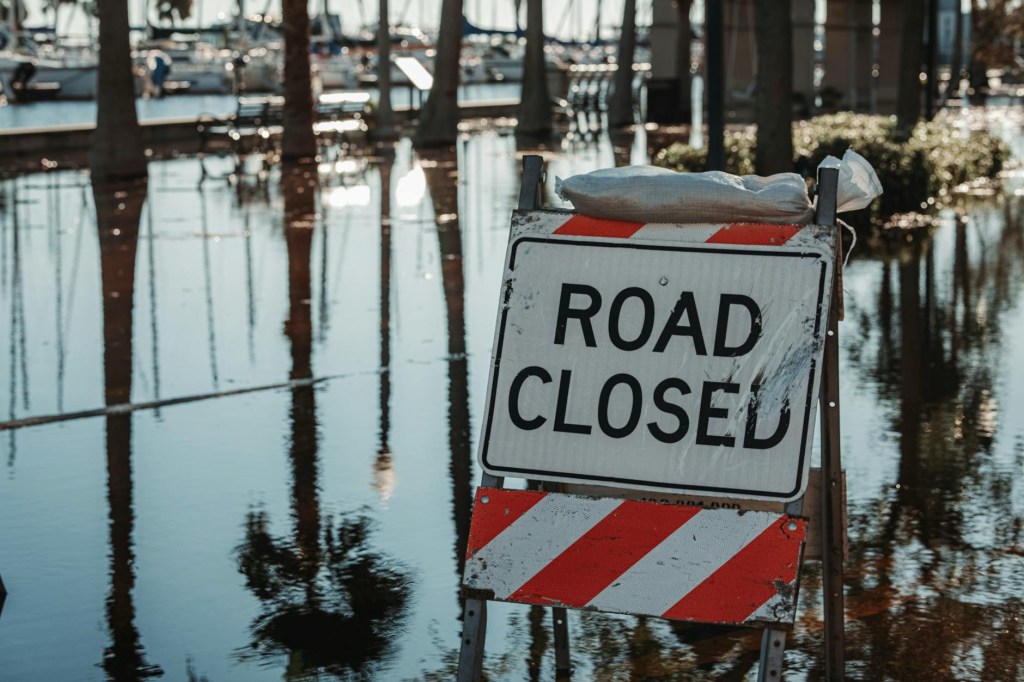
Ian McEwan’s 2025 novel, What We Can Know, imagines Britain in 2119, as an archipelago of islands, the result of flooding caused by global warming and wars. You could say this is a post-apocalyptic, dystopian novel, and yet the feeling is rather cosy. The narrator is Tom Metcalfe, an academic at the University of the South Downs. I found it reassuring that after global disaster there could still be literary types pottering about with their research – in this case, Tom’s obsessive study of fictional poet Francis Blundy who apparently wrote great stuff in the earlier twenty first century.

I did find it odd dealing with a fictional poet who was supposed to have written his best work by now, particularly as there are also references to the work of real contemporary writers. This did require some suspension of disbelief. Also the future world had a strange combination of advanced technological features – a national AI service – and a sense of regression – no aircraft and, apparently, no cars. People get about by electric boat or bike. I mean, I liked this scenario, being a keen cyclist, but it did not seem very likely. How do you build a university on the South Downs without some serious road transport?

On the up side, there is much interesting reflection on how people respond to disaster, cycles of growth and collapse, and how the study of history might be different in the future. The proliferation of electronic communication could leave a hugely increased amount of information to draw upon, for example. This last theme might seem rarified and academic, but it certainly takes an emotional presence in the second half of the book, when Tom finds a document which shows how close, or far away, he might have been from the truth in his previous years of research.

Overall, What We Can Know maybe included a few things that made its world a little less than believable, but putting those details aside, it remained a very interesting and compelling read.

Old Filth by Jane Gardam – New, Old, The Same? You Be The Judge

Old Filth is a 2004 novel by Jane Gardam shortlisted for the Women’s Prize for Fiction. It’s about a judge, Edward Feathers, aka Old Filth, famous in the legal world. His great career over, Edward has retired to Dorset. His wife’s death leads to a period of mental and physical wandering. We learn about his life, born in Malaysia, sent home to England as a child, looked after by careless family members and cruel paid guardians. Then boarding school, university and a legal career in Hong Kong and England (‘Filth’ stands for ‘failed in London try Hong Kong).

The book is about old worlds passing away, both in terms of individuals and their wider society. Edward Feathers is one of the last so-called Raj orphans. It was interesting that the book’s elegiac atmosphere doesn’t present a picture of progress, or of regression. This might irritate those who think of British history in terms of glories. And it might annoy those who see history in terms of progress away from the iniquities of the past. I will leave you to your personal feelings on that, but in this book there is an overall sense of things coming out about even, as a kind of steady state. This is both true of the wider historical picture and of Edward himself, who at the end of the book faces up to a ‘crime’ committed in his youth. I won’t go into details, as to do so would give away one of the book’s reveals. Suffice to say that Edward confesses his crime to a priest, his wrong-doing existing in a grey area between premeditated offence, accident, self defence and fated denouement. And in the end, even though he feels guilt, Edward has no regrets.

There is the potential for melancholy, as Edward realises his once fancy life doesn’t add up to anything in the end. On the other hand, even if we don’t really get progress, perhaps the sense of a steady state is reassuring in a situation that seems to be all about endings.

Old Filth is a poignant, sometimes funny depiction of the end of an era, set against a sense that life goes on. I enjoyed it.