An unnamed man suffers a significant injury when something falls on his head. The exact nature of the accident is unclear. The terms of the compensation settlement do not allow the victim to talk about it, but they do make him wealthy. The man then describes his recovery, the relearning of skills that most people take for granted. Something like picking up a carrot demands forensic attention to the movements involved. The man becomes obsessed with details, spending his settlement wealth in staging precise re-enactments of arbitrary events in his life.
This is an odd book, but it does a good job in showing how much oddness hides in behaviours accepted as normal. Obsessive re-enactments might seem creepy, but they are not so different to practising the movements of a sport over and over until they become smooth and automatic. There is a contradiction here – you rehearse movements repeatedly, really think, and focus on each constituent part, with the aim of making those parts flow together, unthinking, unconscious, and natural.
You could also compare the man’s re-enactment rituals with the experience of reading a novel. Do you read a novel to think about its nuances, or to relax and have a break from thinking? People do both, often with the same books.
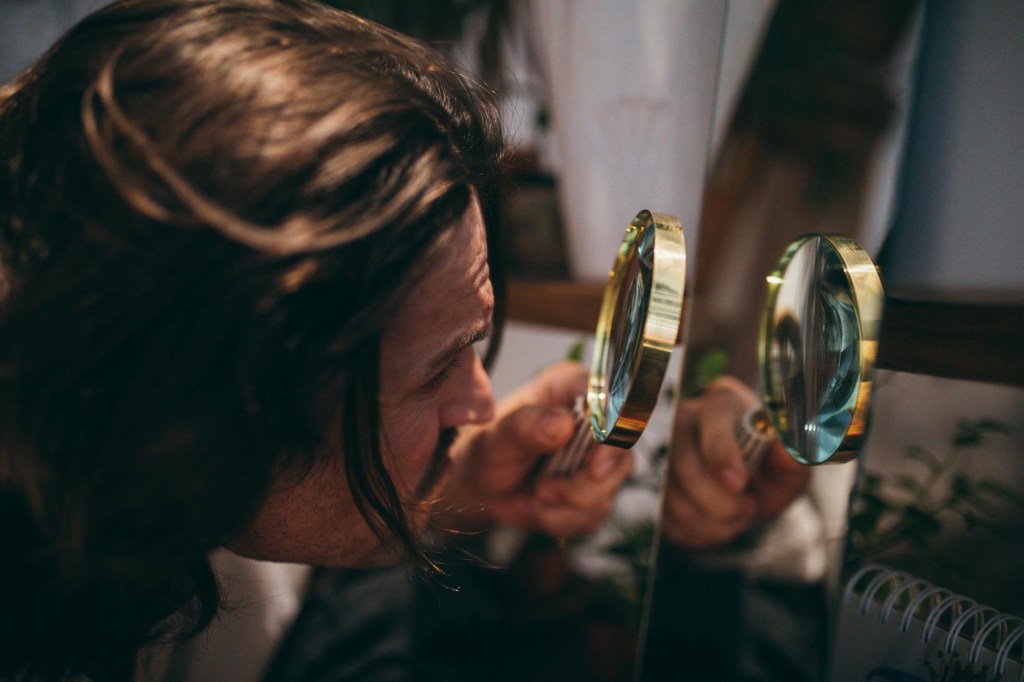
Remainder takes such contradictions to extremes, engaging with details so precisely that they stop meaning anything. Things reduced to their essentials are kind of value free – like the maths of curves, just a lot of numbers, the same numbers, however, guiding missiles as they curve to their target.
I asked myself whether Remainder wants its reader to think, or to have a break from thinking. Mainly the former I would say. It’s fairly hard work. I can see why author Tom McCarthy had trouble finding a publisher back in 2005. But there is also a fascinating hypnotic quality that carries you along. This is a very interesting read, which might get you thinking, at the same time as sending you into a bit of a fever dream
When I was at school in the 1980s, being a writer seemed an unlikely aspiration. Special people were writers, not Kent school boys who happened to like reading. But then, after years of frustrated effort, something happened, maybe around 2010, when I caught up with the fact that the computer on my desk now allowed anyone to have a go at being a published writer. Publish yourself. But what sort of books would I write? Who was I and who would read my work? Today, writers can work in a bewildering variety of genres tailored to certain groups of readers. It’s as though each group can aspire to have their own books. Wondering how I might fit in with all this, I have long pondered on how books ended up where they are today. The following is the result of my pondering.
To begin at the beginning, all contemporary categories of writing are descended from an original single category of book which existed when the printing press first appeared around 1440 – the Bible, or books about the Bible. In 1440, very few people could read, and books were prohibitively expensive. Writers are sometimes known as authors, and that word author – derived from the word authority – is very much a hang over from the time when “divinity” was, in effect, literature’s only genre. The ultimate author was the writer of the Bible. And with printing still in its infancy, this book reached people not through people reading it, but through the Church telling people about it.
The invention of the printing press also coincided with a rediscovery of Greek and Roman writers. These rediscovered classical texts almost immediately began to widen the scope of literature, even if the writers of these works were themselves considered as semi-divine sources of authority and wisdom.
One of the great social convulsions of Western culture soon followed. And it was all to do with reading. Into the sixteenth century, improved printing press design, some increase in literacy, and a new-fangled brand of Christianity called Protestantism, allowed people to start reading the Bible for themselves. Ironically this opportunity for individuals to read the Bible, marked the beginning of the end for the power of a single book. If people were reading the Bible, they could also read other stuff – maybe the Greek and Roman writers who were coming into print. And this natural tendency towards a widening viewpoint could only continue to develop as literacy rates crept up, and printing technology made headway in reducing book prices.
By 1700, academic Jeremiah Dittmar estimates that there were around eighty basic varieties of book serving an enlarged, but still modest, book market, where divinity continued to account for half of all sales. Through the next three hundred years, the rate of change gathered pace. The nineteenth century saw the beginnings of children’s literature as its own specific category. The 1950s and 1960s saw early examples of what is now known as YA. Then, into the twenty first century, literacy in large parts of the world had become almost universal. The advent of digital publication offered lower book prices for readers and the opportunity for anyone to be a published writer. The result has been an explosion of genre varieties, so that the current situation in publishing is the opposite of what it once was in 1440. Whereas in the fifteenth century everyone shared the same book, now it’s almost as though everyone expects to have their own book, unique to their own part of life. The bewildering variety of genres reflects the fact that today almost everyone is a potential reader, or writer.
It is of course a great thing that perspectives and viewpoints presented in books have increased out of all recognition. And yet, this new culture is also a fragmented one, with people tending to live increasingly in their own cultural bubbles. Writers write based on their own experience, so it’s inevitable that people similar to themselves are more likely to resonate with their work. Nevertheless, I think in some small way, any writer instinctively harks back to 1440, when there was one book for everyone. Writing has to manage that trick of reflecting its readership, while not confining them. A book should be a means of offering a wider perspective rather than closing the door. After all, a bestseller is by definition a book that crosses divides, appeals to lots of different people, and echoes in a small way that situation right at the beginning of publishing when a book was something that everyone shared in together.
Trio is a 2020 novel by William Boyd, following three characters all linked to a film shoot taking place in Brighton in 1968. Talbot Kydd, the film’s producer, struggles with his sexuality and a treacherous business partner. Anny Viklund, a young American actress tries to cope with sudden stardom and the end of her marriage to a recently convicted terrorist. Novelist Elfrida Wing, wife of the film’s director, is in the throes of alcoholism and writer’s block.
The world of 1960s film making is excellently portrayed. The whole enterprise is beset by chaos and stress, the emotional volatility of new stars, the monstrous egotism of fading stars, cameramen stealing film stock for their own dubious side projects, talent agents who are little better than mobsters. And yet in contrast to all this, there’s a scene where Elfrida, following a drunken collapse, rings the production office and asks them to arrange a doctor for her. This is quickly done, because while the film is shooting, it will sort everything out for you. There are cars and drivers to take you places, lawyers to deal with legal hassles, accountants to provide money if you need it, and doctors on retainer to look after your health. Elfrida thinks how nice this is, and how once the film has wrapped, she will have to go back to organising her own GP appointments.
I was reading about people pushed to the edge in various ways, living in a situation where, as long as this chaos continues, they will be looked after. Picking up the book was like someone calling me a reliable unit car to take me on a trip. The book was so readable and compelling that whilst among its pages, everything would be sorted for me. Halfway through I realised that it would be sad to have to go back to organising my own time.
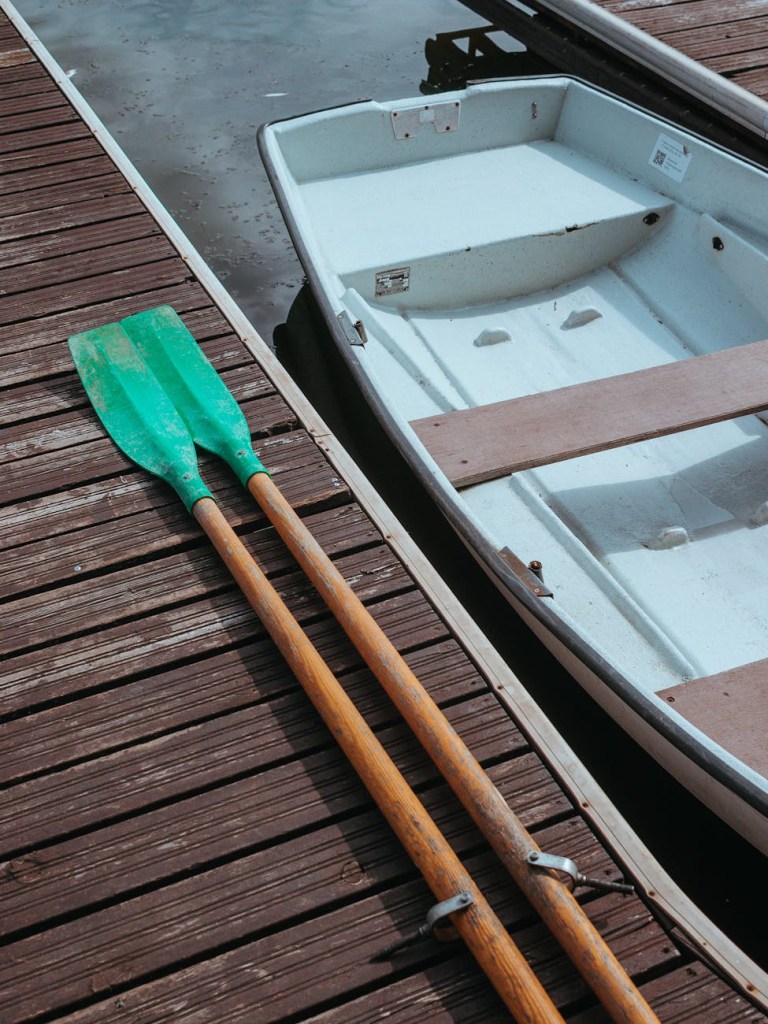
This is my second read of Three Men in a Boat. The review I wrote a few years ago follows this article. But first, we have my more recent musings, which ended up not really being a review at all. It’s more me peering into the depths that lie beneath the surface of this collection of jolly reminiscences and reflections on Thames leisure boating. It’s Martin’s companion to Three Men in a Boat, if you will, though I am perhaps more of a stowaway than an invited guest. The article that follows is quite long and meandering and probably only of potential interest to those who have read the book, rather than to those who are thinking of reading it.
So if you are amenable to a longish trip where you might have to do some rowing, off we go.
Harris, George, and narrator J, three young men with middling jobs and lives in nineteenth century London, decide to take a trip on the Thames. They think this will be good for their health. The journey starts at Kingston, former place of crowning for Anglo Saxon kings, the centre of the kingdom in effect. The focus has since left Kingston, but an important royal palace remains close by – Hampton Court.
Harris recounts his experience in the Hampton Court maze, a journey where the main aim is not really to get to the centre. I mean that’s part of it, but once you get there, the next challenge is to get out again. Reaching the centre repeatedly, as Harris ends up doing, is not the definition of success. And just before Harris’s maze memories, we have J reflecting on the fact that people always want what they don’t have – girls who are alone desperately wanting boyfriends, and girls with boyfriends wanting rid of them, for example. The girls go in to something they want to get out of again.
Against this contradictory backdrop, J and Harris set out on a journey where there is really only one way you can go – along the course of the river, to their destination in Oxford. We will soon find things are not that simple.
No sooner has the journey started than it seems to flirt with endings. Harris wants to go and see significant tombs. Tourists seem to like visiting tombs, but not J, who seeks to avoid such morbid interests. He drags Harris away from his graveyards, so that the journey can continue towards Weybridge where J and Harris will pick up George, and complete their group of three. We’re almost halfway through the book by this time, a point marked by confusion. George is given a towline, with the aim of walking along the river path pulling the boat behind him, providing a rest from rowing. The towline gets hopelessly tangled. J tells stories of two men so intent on untangling a towline that their boat drifts off, and of a couple so engrossed in talking to each other that they have no idea their towline came loose from the boat they were apparently pulling, many hours before. But even if these stories of towing all end in failure, does the fact of a boat not reaching its destination really represent failure? After all, we have already had an example of undesirable endings in the graves Harris wanted to visit. Maybe in that context, not reaching the destination is no bad thing.
We get to the end of the first day, which comes to a rather painful conclusion as the three elect to push on a few extra miles before dark and regret their decision, achieving nothing beyond wearing themselves out. In their tired state, a mile feels much further than a mile. Making tea on the first night, advice is given not to watch the kettle boil, otherwise it never will. Focusing too much on your destination is a mistake. You will get there more surely if you forget counting the miles, which somehow lengthen in the counting of them.
During the night J finds it hard to sleep. A bed in a rowing boat is not a restful place. He gets up, stands on the riverbank and looks up at starry skies. Ironically, in standing sleepless under the stars, he feels peaceful.
The journey then follows a sequence of events where the mundane and the significant travel together. Passing Magna Carta Island, J reflects on great moments in history, before recounting the history of his efforts to get into a tin of pineapples without a tin opener. When the wind starts blowing in the right direction, the crew raise a sail, which has the boat flying along with the breeze, part of the glories of nature, before crashing down to Earth again in the form of a collision with fishermen. The three making this journey are a trio of ordinary men, and yet the number three has quiet parallels with the divine trinities that appear repeatedly in various religions. And the fishermen they crash into have religious connotations too, as in fishermen on the Sea of Galilee, recruited to be fishers of men.
After having trouble with steam launches, the three stop at Wargrave, near the George and Dragon pub. The pub sign shows the battle with the dragon on one side, George having a pint on the other side after the work is done. Heroic George becomes ordinary again after his battle. Meanwhile, at Henley, non-heroic Thames tourist George tries to play the banjo he has brought along on the trip. Being a beginner, no one is impressed with his efforts. We also get reminiscences about the chaotic early rowing efforts of J and George. They both might aspire to banjo playing and rowing greatness, maybe even to becoming a hero like that famous George who fought the dragon. And yet we have already seen heroic George having his pint like an ordinary man. This makes you wonder if hero George’s situation is really any different to that of tourist George, who can’t play the banjo let alone fight dragons. J chooses this moment to comment on the nature of achievement with reference to an experienced boatman:
There is something so beautifully calm and restful about his method. It is so free from that fretful haste, that vehement striving, that is every day becoming more and more the bane of the nineteenth-century life. He is not for ever straining himself to pass all the other boats. If another boat overtakes him and passes him it does not annoy him; as a matter of fact, they all do overtake him and pass him – all those that are going his way.
A beginner will be trying to get somewhere. An old boatman won’t mind too much about getting somewhere, and will get there more effectively.
Chapter 16 is about the stretch of Thames at Reading. Here the metaphorical maze we have been exploring takes a moral turn. J accepts an offer from a friend to have a steam launch pull their boat for a while. Now there is a shift in perspective for the three men in their boat. Until this point, steam launches have been the bad guys of the river, swaggering along, bullying little boats in their path. Now that J, Harris and George have joined the steam launch brigade, it is the rowing boats that become the enemy, getting in the way, causing trouble for the sake of it.
Following this lighthearted reflection on moral relativity, a much darker moment makes the same point. George sees a floating object which turns out to be the body of a young woman. Later the story of this woman is revealed, a not unusual tale for the time, of unexpected pregnancy outside marriage, the subsequent shaming and shunning of the woman by all who knew her, leading eventually to hopeless despair. Those who turned their backs on this unfortunate individual felt they were taking the moral high ground, when in J’s telling they become wicked. Virtue becomes vice, and vice versa. The moral maze takes a twist. Morality can be compared to the claims of fishermen, which we hear about in chapter 17, claims which famously cannot be trusted for a moment.
In chapter 18, J recalls a time when he and George were sitting in their boat waiting for a lock to fill. On the bank, a photographer was setting up a shot of all the happy travellers, hoping to sell the pictures to his subjects. Everyone strikes a pose, distracting J and George who fail to realise that the bow of their boat has become stuck in lock woodwork, threatening to tip their boat as the water level changes. Quick and ungainly action saves the day and spoils the shot. All photos of the Thames are still, while the actual river is ever moving and unpredictable. Movement might seem hazardous, just as a world with no fixed conception of morality might seem to offer no security. And yet the photograph scene suggests the real danger comes from trying to fix things that will not be fixed.
So we reach the final chapter. After two days in Oxford the travellers begin their return journey. They are going downstream now, going with the flow. But there is no feeling of ease. Rowing against the tide provided a feeling of achievement, whereas now the sense is more one of drifting. It starts to rain. The bright river of sunny days is reduced to a dirty brown stream. After originally going on this journey for their health, the travellers fear their health is under imminent threat. They abandon the boat early and catch a train back to Paddington, before heading to a restaurant in Leicester Square. You could say that the journey ends in disappointment and failure, and yet the lovely Leicester Square meal is more like a victory banquet. The rowers escape from the river, back into their everyday lives, now transformed into a sanctuary they are glad to find again. So even if the three travellers did not find a great destination at the end of their jaunt, even if they did not find the centre of the maze, they managed to find a way out, which in maze terms is success.
2018 Review
Holidays are odd things. They derive from exhausting pilgrimage where sedentary, medieval folk would up-sticks and walk hundreds of miles on muddy tracks, in unsuitable clothing, at the mercy of thieves, brigands and weather, to reach a distant shrine. Equally, holidays also derive from peaceful rest cures at spas and seaside towns, where instead of getting foot sore you’re more likely to get foot massage. This contradictory ancestry ends up combining a long physical ordeal in search of spiritual meaning with the beach resort experience, reclining on a lounger, watching waves lap on smooth sand, cool drink in hand.
Both the pilgrimage and sun lounger aspects of holidays are explored in Three Men in a Boat, Jerome K. Jerome’s nineteenth century account of a Thames boating trip. The nineteenth century was the time when holidays came into being for people generally. You no longer had to be religiously earnest, or be wealthy enough to sit around drinking mineral water in Bath or Tunbridge Wells. People were earning better money, had more free time and, thanks to the railways, could travel more easily. The three men who take Jerome’s boat trip are regular chaps. George works as a bank clerk. It’s not clear exactly what Harris and Jerome do, but you don’t get the sense that they are government ministers, captains of industry, or deep-thinking academics. They are the new holiday makers, embarking on a journey of ancient contradictions.
In many ways this boat trip is a spiritual pilgrimage, an attempt to leave behind the humdrum and find something more profound. Against a background of arduous effort and spartan living conditions, there are reflections on life and extravagant descriptions of nature in all its comforting, uplifting beauty. But the attempted profundities are always punctured by various down-to-earth mishaps involving ill-behaved dogs, poor boatmanship, bad cooking, vengeful steam launches, forgotten tin openers. While this journey might be seen as a kind of physically demanding pilgrimage, it is also an indolent escape from stress and strain. Each man takes it in turn to pull tricks to get out of rowing. Jerome avoids tours of churchyards containing historically significant graves. There is much lounging around in riverside meadows, and laughter at the memory of conscientious old school fellows who threw themselves into French irregular verbs.
So where does this physically demanding, yet languid – profound yet commonplace – journey take us? Without giving anything away about the “denouement”, it takes us somewhere significant, while allowing us to escape heavy significance. It takes us somewhere new, while also taking us home again with a new appreciation of our daily lives.