A Distant View of the Perfect Book

Little paris Bookshop

This book is about a Paris bookseller, who styles himself a literary pharmacist dispensing books for emotional ailments. I work in an actual pharmacy, so I was interested in this idea. Real pharmacy, of course, is precise, with cures measured in milligrams. Literary cures are not going to be like that, and the sceptical part of me wondered at the wisdom of comparing the vague benefit of books with pharmacy. Yet as a reader, I had the sense that books are good for you. So, what benefit might I gain from The Little Paris Bookshop?

Initially I didn’t seem to be gaining very much. The story started well, only for the plot to become decidedly shaky – based on a misunderstanding that was difficult to accept in people who were supposed to be sun-moon-and-stars in love. There were coincidental meetings that strained credulity. The sentimental view of books themselves became wearing, almost as if this was a novel about the idea of a good book rather than the thing itself. After all, Southern Lights, the book that literary pharmacist Jean Perdu most admires, is itself fictional. Only a pretend book can be perfect. We do have to accept that about books. This is where we come on to something more positive. Real books are not perfect, but they are the only kind of books that are going to offer us something we can use.

Back in the real world, The Little Paris Bookshop made some reasonable claims for the value of books. Books typically take you into the experience of someone who might be very different to yourself. In this way, they can help enhance a sense of empathy. That’s what I think Nina George is getting at when she says reading can make people more temperate, loving and kind. In this respect, the call for the world’s rulers to take a reader’s licence is a good one. However, Nina George is also right when she says that reading cannot give the power of empathy to a person who lacks it. “The truly evil… did not become better fathers, nicer husbands, more loving friends.” Sadly there is no cure for sociopathy.

So beyond the fact that books can make nice people nicer, what is there? The Little Paris Bookshop has no easy answers on that score. Books do not seem to be the solution to Jean Purdu’s problems. In fact, you could say he turns his back on books and goes off and gets a life. But what kind of life is that? Well, it’s a kind of glorified boating and beach holiday. He goes on a trip he doesn’t really need to take, but goes anyway. He is not looking for anything in particular, which provides the kind of open-ended journey where he does actually find something. Maybe that’s what a book is, a holiday, special in not being strictly needed.

I have to admit this wasn’t the best holiday I’ve ever taken. Some fellow tourists did get drunk and over excited.  However, there were some interesting views, a few worthwhile excursions, and some holiday reading that stayed with me after I returned home.

Carrots, Rumour and Fake News

IMG_0504

Memorial to RAF West Malling at King’s Hill in Kent 

Last weekend I took a ride to what was once West Malling Airfield. This former Battle of Britain air station is now a smart housing development, at the centre of which, next to a Waitrose shopping centre, stands the old control tower, repurposed as a coffee shop. After a cup of tea and slice of granola, I went to have a look at a memorial behind the control tower, a segmented circle arranged around an RAF roundel. Each segment either defined a wartime slang word, or carried a brief story from the airfield’s history. There was one story in particular that caught my eye. 85 Squadron based at West Malling became expert in night fighting, so much so that the government spread a rumour that their success was due to a diet of carrots boosting the pilots’ night vision. This fabrication served to disguise the existence of airbourne radar used by the squadron, while also encouraging people to grow vegetables.

I wondered if this carrot story had anything to teach us about why some falsehoods become accepted as fact. So, I consulted Psychology Today, found a list of reasons why powerful rumours occur and applied them to carrots.

Rumour feeds on anxiety, tending to flare up around particularly stressful events, like 9/11. Rumour and crisis go together because in times of stress, evolution has designed us to seek out and share information to help deal with an emergency. Unfortunately when information is lacking we tend to make things up, since exchanging information, even if it is false, tends to alleviate our anxieties. So, even though there was nothing people could do to see better in the black out, exchanging information about carrots helping night vision made people feel better.

No matter how ludicrous it might be, a rumour tends to start off in something that could actually be true. George W. Bush did not say “the problem with the French is that they don’t have a word for entrepreneur”. But with a history of linguistic faux pas, it’s the sort of thing he might have said. Thinking of carrots, they are a source of vitamin A which is involved in eye health, even though eating carrots is never going to turn your eyes into night vision scopes.

Easily swayed nonexperts are more important than influential people in giving power to rumour. Psychology Today uses the example of Bubble Yum, a chewing gum product from the 1970s which aimed for immediate bubble blowing squishiness without the bother of preparatory chewing. Some imaginative child in a New York school wondered if Bubble Yum’s squishiness was due to the fact that it was made from spider eggs. Research commissioned by Life Savers, the company manufacturing Bubble Yum, estimated that within ten days of the company learning about the spider egg rumour, well over half of New York’s children had heard the story. This powerful rumour did not spread because of celebrity endorsement, or through major media channels, but by passing between children in playgrounds. Going back to the carrot story we see that the people who propagated it were housewives who prepared food and their children who ate it. John Stolarczyk of the World Carrot Museum – who knew there was such a thing? – suggests that the carrot rumour probably started among people like this. The Ministry  of Information then reinforced the message for its own ends.

The more you hear a rumour the more you will believe it. The idea of Carrot vision could be reinforced at most meal times, and on most dark nights.

blackout-611

A wartime poster celebrating the power of carrot night vision – courtesy of the World Carrot Museum

Rumours reflect the zeitgeist, that is, a potent rumour will concern itself with what people are thinking about anyway. They might be thinking about a political candidate in an election, which provides fertile soil for rumours about them. In the case of carrots, people were thinking about fighting a war, finding enough food to keep them healthy, and finding their way safely around towns and cities blacked out at night. The carrot rumour naturally combines all these things.

Rumours are simple and concrete. Rumours have a single, uncomplicated, vivid message.  We only use ten percent of our brains. People swallow eight spiders a year in their sleep. Carrots let you see in the dark. We remember concrete, sensory things better than abstract things. We remember “carrot” better than “truth”.

Rumours are generally connected to people we dislike or envy. Rumours often attach themselves to celebrities, people who are admired and envied in bewilderingly equal proportions. Cher and Janet Jackson have both been the victims of stories about ribs removed in pursuit of a better figure. The most powerful rumours go even further and imagine the death of a celebrity. Catherine the Great died trying to make love to a horse. Paul McCartney is dead. Avril Lavigne is dead. In the case of carrots, any sense of dislike is transferred to a German pilot over Kent getting shot down by John “Cat’s Eyes” Cunningham based at West Malling Airfield.

So the carrot story, by any measure, makes for a powerful rumour and has a lesson for us about today’s “fake news”. We live in uncertain times, with worrying problems in major governments, creating the basic state of anxiety in which rumour proliferates. We have massively enhanced powers of communication passing information quickly to millions of people who are not expert in what they are reading or watching. The internet tends to reproduce an idea in endless loops, typically packaged in short, uncomplicated, often visual presentations, which we now describe as a meme.

This all goes to show that no matter what conspiracy theorists may say, the mainstream media is not the creator of fake news, just as New York’s newspapers did not create the story about spider eggs conferring squishiness to Bubble Yum. Powerful organisations like the British Ministry of Information can support rumour, but the fuel which fans the flames comes from fear, envy and lack of specialised knowledge amongst the population itself. Indeed the current role of reputable news organisations these days is not creating stories. Instead they are often trying to debunk them,

Zoella, Emily Dickinson, and the Swiss Government

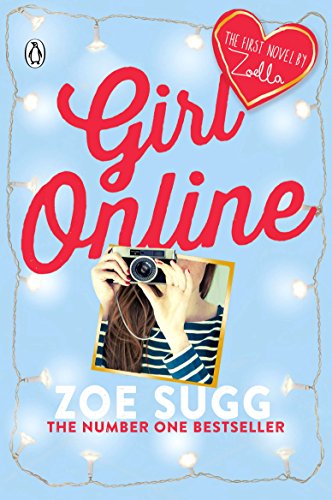
Zoella Book

Perhaps it’s a way of simplifying things.  Whether it’s historical periods,  ideas or inventions, we like to link them all with one person.  Monarchs are a shorthand for their time. Famous scientists are picked out of a tangle of piecemeal progress to stand for that progress. Isaac Newton for example, is famous for his scientific work, and also for his ruthless efforts to deny the efforts of others.

Then there’s the writer, the name that appears on a novel,  or a collection of poems.   Surely a book is not like seventeenth century science hi-jacked by Newton, or sixteenth century England, personified by Queen Elizabeth I. Surely a book is about individual creativity?

Well, no not really.  A book has an author, which simplifies a complicated reality which involves a lot of people. To start with there’s the long suffering wife, husband or partner who might have lent financial support, manuscript reading time and ideas. Then if you’re lucky there might be editors, agents and beta readers, all feeding into this project which carries the author’s name like a kind of branding. Of course there are gradations, with someone like Emily Dickinson at one end of the scale – famously working in reclusive isolation – and Zoella at the other, who apparently chatted to an editorial team at Penguin, who then wrote her novel about a young girl who makes it big in the video blogging world.

However, even with contrast as stark as this, we have to be careful about making assumptions. The mythology of Emily Dickinson plays up her isolation, when in fact, for a recluse, she was extremely sociable – it’s just that she tended to carry out her relationships with people via letter.  About a thousand of her letters survive, although this is probably only one tenth of the total.  One of her favourite correspondents was sister-in-law Susan Gilbert, who according to biographer Wendy Martin offered friendship, advice, and editorial suggestions.  Emily Dickinson did not work in isolation.  Writing is communication and you simply cannot do it alone.

Emily Dickinson

.

And that brings me sadly, to politics. Writers do not work alone, and neither do politicians.  While a writer bigging themselves up might be annoying, the idea of the great individual can be positively damaging when someone in politics starts seeing themselves as some kind of superhero. Governments are huge organisations involving thousands of people. It is damaging when one person begins to think they are more important than the institutions that provide the stability of government. In the UK, prime ministers ask you to elect them because they will give strong leadership, as though that is the key to success.  This is simply not true. In fact, you could say the opposite is true. A truly successful country has strong institutions that protect against the vagaries of individuals.

Switzerland, for example, is one of the world’s most successful countries. It also has a government designed to make sure that strong leadership concentrated on one person does not arise. The President of the Swiss Confederation is the presiding member of the seven member Swiss Federal Council. The person filling this role is elected for a one year term by the members of the Federal Assembly. The President chairs meetings of the Federal Council and undertakes representational duties, but does not have any powers beyond that of other members of the Federal Council. It is very unlikely that you know the identity of the current person holding the role of president – who when I wrote this article happened to be Doris Leutard – because the Swiss system does not seek to concentrate power in one person.

Doris_Leuthard_2011

Doris Leutard – This photo is from the website of the Swiss Federal Chancellery

The Swiss government is the equivalent of  an editorial team with Doris Leutard as the writer. Doris might write an article after reading and thinking about pieces written by other people. A partner will read early drafts over, make a few comments. Doris may then change some things. The fact that it’s got her name on the finished product should not deceive you.

If you are one of those unsung heroes who have helped a writer, leant an ear, read their stuff, made suggestions, given time and patience and received no recognition, this piece is dedicated to you.

A Game of Thrones – Fantasy in Exile


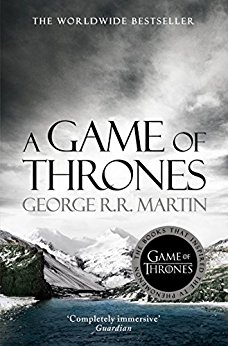
Game of Thrones

First a little history for you.   Folk tales took place in our world, even if their location was far away or long ago.  In contrast, fantasy authors since the nineteenth century have shunted their stories off into separate worlds, often helpfully mapped in the first few introductory pages.  This shutting away is a major characteristic of modern fantasy writing, illustrated by the fact that as of 2017, Wikipedia lists 202 fictional worlds created by well-known authors. It’s as though real life doesn’t have room for fantasy anymore.  Fantasy has been banished, like an eighteenth century convict sent to Australia.

A Game of Thrones appears to follow this familiar pattern.  The story is set in its own fictional realm, with maps provided of three fanciful continents, Westeros, Essos and Sothoryos.  However, the story opens with a more historical than fantastical feel. There are no wizards with pointy hats.  The powerful families of the book take advice from “maesters”, people who are like early scientists, studying the technical aspects of medicine, architecture, history, navigation and so on.  Old wives’ tales concerning lost magical forest dwellers do not impress them.  They have shut the old tales out of their minds.  In fact this shutting away of folklore is made literal, by a vast ice barrier.  This is a kind of Hadrian’s Wall, manned by a group of soldiers known as the Night’s Watch, blocking all access to the northern part of Westeros. It is not entirely clear what lies behind this fortification, beyond a sense of slowly developing threat. We hear stories of magical goings on, which the maesters airily dismiss.  An ocassional zombie-like creature emerges to do battle with the Night’s Watch.  It’s as though all the folklore of Westeros has been exiled behind that wall, just as fairy tales in the real world have been exiled to their own separate places. You get the feeling that the power of those tales is not happy to stay there.

Meanwhile in the medieval setting south of the wall, George R.R. Martin tells a well-handled tale of brutal, self-involved, incestuous politics.  There are complex meditations on the nature of power and virtue.  However, for me the real quality of the book is that underlying sense of old world legends and tall tales shut away, waiting to come back. If you were to write a book that was both modern fantasy and a thoughtful reflection on modern fantasy, then  A Game of Thrones would be it.


Agatha Christie, Hiding in Entertainment


IMG_3228

The Boathouse at Agatha Christie’s Greenway estate near Dartmouth

Agatha Christie was a hugely popular crime and thriller writer who sold millions of books during a working life extending from the 1920s to the 1970s. In 1962 a UNESCO report quoted by her biographer Charles Osborne said that Agatha Christie was the most widely read British author in the world, with Shakespeare second, a long way behind. The Guinness Book Of Records – according to Wikipedia – claims around four billion copies of Agatha Christie’s books have sold worldwide, with only The Bible selling in greater quantities.  By any measure Agatha Christie was seriously successful.

Widely read though they are, detective stories have long been dismissed as mere entertainment.  WH Auden viewed them as tobacco, an addiction which wasn’t quite proper. Now, it is not for me to spoil things by claiming detective fiction for the earnest English Literature crowd, but it is interesting how closely detective stories are related to the earliest days of novel writing. At the beginning of the eighteenth century, Puritan self confession narratives began to evolve into fictional moral tracts, which became what we now know as the novel. In the popularity of detective stories, it is easy to hear echoes from the novel’s earliest days. Detective stories involve a crime, usually a murder, and the successful uncovering of a culprit. On the way the best crime writers are able to explore our conceptions of morality.

So was Agatha Christie a writer who could explore morality?  If you were to read some of her autobiographical writings, you would not think it likely.   In fact, she talks of right and wrong in terms stark enough to sit easily amidst the adherents of fringe right-wing politics. The innocent and guilty are portrayed as fundamentally different, virtually as separate beings:

“Why should we not execute him? We have taken the lives of wolves in this country; we didn’t try to teach the wolf to lie down with the lamb – I doubt really if we could. We hunted down the wild boar in the mountains before he came down and killed the children by the brook. These were our enemies and we destroyed them.” (Quoted in The Life and Crimes of Agatha Christie by Charles Osborne).

Statements like this do not offer much hope for a nuance and ambiguity. Nevertheless, through the 1930s and 1940s, the Agatha Christie publishing phenomenon exploded around two detectives, a former Belgian policeman named Hercule Poirot, who first appeared in The Mysterious Affair at Styles in 1920; and Miss Marple, who usually solved crimes in the village of St Mary Mead, making her debut in Murder at the Vicarage in 1930. None of the many novels featuring these two characters was to sell millions by presenting dull and obvious homilies.   Murderers are frequently portrayed sympathetically, while victims are often flawed in some way.  An Appointment With Death, a Poirot novel published in 1938, is typical.  An evil old woman called Mrs Boynton takes a holiday in the Middle East with her unfortunate family, which she has terrorised for decades. The family finally snaps, murdering the old woman with an overdose of her heart medicine, hoping that the murder will be overlooked as death by natural causes. The various suspects are considered by Poirot who just happens to also be holidaying in the area. As part of his investigation, Poirot interviews a doctor, who does not want the death investigated.  He argues that the world is better off without Mrs Boynton, and that one damaged member of the family, Ginerva Boynton, might have committed murder in self-defence:

“I should say mentally she is in an extremely dangerous condition. She has already begun to display symptoms of schizophrenia. Unable to bear the suppression of her life, she is escaping into the realm of fantasy… The sufferer kills – not for the lust of killing – but in self-defence.”

Meanwhile, crusty Colonel Carbury dismisses such liberal meanderings and pushes for a proper inquiry.  He does not want this because of any moral qualms, but because as he puts it: “I’m a tidy man.” You get the feeling that Colonel Carbury is a fool, whose neat conception of the world has no room for its true complexity.  Poirot himself is similar in outlook, admitting to no gray areas:

“The victim may be one of the good God’s saints – or, on the contrary – a monster of infamy. It moves me not. The fact is the same… I don’t approve of murder.”
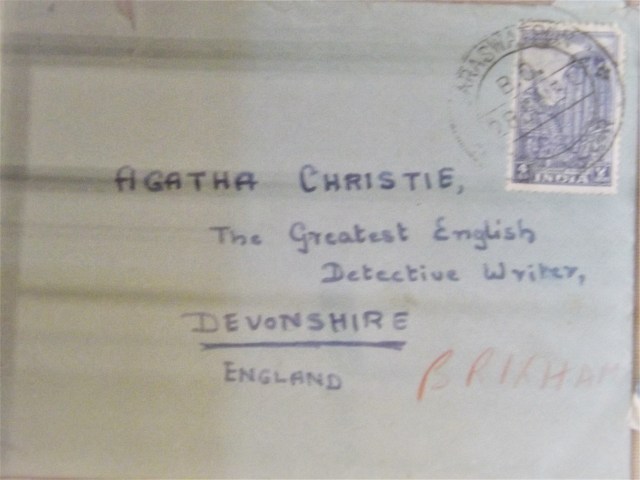
Hazel Hatch and Salcombe Holiday 274 (2)

A letter, received by Agatha Christie, on display at Greenway House

So how to do you reconcile the novels with the autobiographical views?  Perhaps there’s a clue in the fact that Agatha Christie herself was always adamant that her stories were merely unimportant entertainment.  Perhaps by viewing her writing in this way, she was free to explore ambiguities that she was reluctant to accept in her daily life as a wealthy English woman who wanted the criminal classes shot like wolves and wild hogs.  If she came to different conclusions in her books, that didn’t matter, because her books didn’t matter, even if they did sell in their billions.

The word entertainment comes from a Latin word “tenere,” meaning “to hold”. We are held by the things that entertain us, given succor by them.  Christie novels offer a clear and comforting picture of morality where a supreme, seemingly all-seeing detective will always solve a crime. And yet alongside this reassurance there is an accurate reflection of the true complexity of human behaviour where innocent and guilty are almost interchangeable. In a Christie story, the wolf and the lamb not only lie down together, they are often the same animal. And as for Poirot, a character who Christie said she ended up hating, he sees everything, and yet seems blind to life’s gray areas.

In this respect it is not so fanciful to ultimately see a link between the world’s two top best selling collection of stories.  Perhaps they both hold people in a similar way.  In Exodus, for example, God has to ask Abraham for his help in deciding what to do with Sodom and Gomorrah. God sees everything, but in doing so, like Poirot, he is not involved. Abraham is involved, does not have a universal breadth of vision, but “understands” things in a way that an all-seeing power cannot. God has to ask Abraham for advice.  This section of Exodus is just like a Christie story. Perhaps it is a bit intimidating to feel that you might be writing a modern Exodus – so we might understand why Agatha Christie was so keen to dismiss the significance of her stories.  Nevertheless, significant is what they are.
 

The Lord Of The Rings – A Safe Place for Dangerous Things

IMG_1401

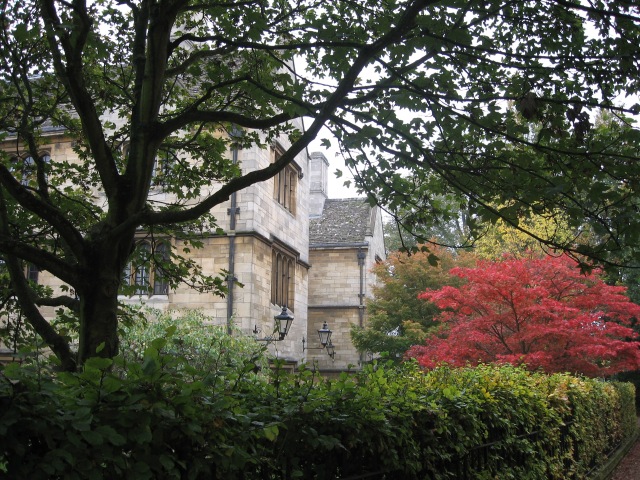
Merton College Oxford, where Tolkien was Professor of Anglo Saxon Studies

It is often the case that practitioners of humble art forms have more freedom of expression than those working at the smarter end of the market. Until the fifteenth and sixteenth centuries,  pictorial art was confined to religious themes, and physically restricted to church buildings. The widening of art’s scope took place not in the painting of timeless masterpieces, but in the decoration of tapestries, storage boxes, furniture, crockery and cutlery. At the National Gallery, fifteenth century storage boxes decorated by Botticelli and Piero di Cosimo are just as important as famous paintings. It was the lack of expectation surrounding a storage box that allowed Botticelli to try different things in safety.

A similar thing often happens with writing. Take the work of J.R.R. Tolkien, for example.  A devout Roman Catholic after converting at a young age, Tolkien’s religion did not naturally admit to change, questioning and ambiguity. However, in the safe place of seemingly unimportant children’s stories, Tolkien found a new freedom to explore.

Tolkien’s The Lord of the Rings opens in The Shire, an imagined rural community of hobbits, small, furry-footed folk who enjoy eating, drinking, smoking pipe weed, and pursuing an unvarying farming existence. The Shire, however, is not simply an idealisation of an older and better world. There is much small-mindedness in hobbit society. Maps of the Shire show mostly white space beyond its borders. And even within the Shire, hobbits from one area will judge hobbits a few miles down the road as strange folk. It is not surprising that some hobbits feel restless in this stultifying little community. There’s old Bilbo Baggins for example, the hero of Tolkien’s first book The Hobbit, who went on a long journey and never really settled down afterwards.

By the time The Lord of the Rings begins, Bilbo is one hundred and eleven years old. Bilbo owns a mysterious magic ring which he picked up on his travels. This ring, as it turns out, has various dark powers, one of which is to keep its owner from ageing. Bilbo is one hundred and eleven but looks much younger. While this might seem like a good thing, the endless youth provided by the ring actually presents itself as a failure to move on. Bilbo makes an important personal step when he manages to heed the advice of his wizard friend Gandalf, and hand the ring to his adopted heir, Frodo Baggins.

Ironically, the ring that kept Bilbo’s life in limbo immediatly creates a revolution in Frodo’s life. Gandalf explains to him that the ring is sought by evil forces, hoping to use its powers to enslave Middle Earth. Frodo and a few friends set off on a journey designed to keep the ring out of enemy hands. On this journey, change remains an overriding theme. One of the most telling moments comes in an argument between the good wizard Gandalf, and Saruman the White. Saruman, the wisest of wizards, has turned to the dark side. The furious row between the wizards is virtually the conflict between the outlooks of religion and science. Gandalf objects to the fact that Saruman’s once pure white cloak is now multi-coloured. With scientific sophistication, Saruman replies that white can be many things:

“White cloth may be dyed. The white page can be over written, and the white light can be broken.”

The image of breaking white light is clearly inspired by science. Isaac Newton had shown in the eighteenth century that white light is actually made up of coloured light. Passing white light through a prism has the effect of breaking white light into its constituent colours. Gandalf objects that “he that breaks a thing to find out what it is leaves the path of wisdom.” This is the philosophy of a man who instinctively shies away from the modern, scientific world.

IMG_0303

Woolsthorpe Manor, Lincolnshire, where Issac Newton studied light, confirming that white light consists of a spectrum of colour.

We should remember that Gandalf is called the Grey, with connotations of boredom, colourlessness, and the difficulty of defining clear categories.  Steady old Gandalf does not simply represent good any more than treacherous Saruman simply represents evil. The idea of change in The Lord of the Rings is complex, there are many grey areas, which were lacking in Tolkien’s everyday life bound by rigid belief.  Tolkien claimed that his stories had nothing to do with commenting on real issues.  He tried to keep them a safe place.  The reality is, Tolkien shone the white light of his life through the prism of his books, and it emerged as many colours. Maybe that’s what always happens in great writing.

Books About Trains – La Bete Humaine Meets Thomas the Tank Engine

La_Bete_Humaine_Cover

La Bete humaine reminds me of the Thomas the Tank Engine books. There are a lot more stabbings, suicides and sexual encounters in La Bete humaine, but essentially Emile Zola and the Rev W. Awdry are writing about the same thing. They both parallel human life with steam trains and the rail systems they run on.

Awdry presents his engines as having personalities of their own, who have to accept the direction of their driver if they are to find happiness and fulfillment. The Thomas story that made the biggest impact on me as a youngster was a story about Gordon, the most powerful and proudest locomotive of them all. I recall one time he had a new paint job, and was so pleased with it that he steamed into a tunnel and refused to come out, not wanting the weather to spoil his lovely blue paint. Eventually the Fat Controller walls Gordon up in his refuge, and only allows him out when confinement in the tunnel had reduced him to a stiff, grimy, rusty shell of an engine. That’s one way to punish the sin of pride.

In La Bete humain the trains are also presented as having personalities. La Lison is a good, dependable engine, who until a terrible night of overwork in a snowstorm, has a loving relationship with her driver. Engine 608 is a headstrong youngster who needs careful handling. Like Awdry, Zola draws parallels between the life of steam engines, struggling against or cooperating with their drivers, and the lives of human beings, who struggle against or cooperate with the forces shaping their destiny. The difference between Zola and Awdry lies in the nature of the driver, the controlling influence.  In the Thomas stories, we don’t really ever get to know the drivers. They are an anonymous guiding presence whose wisdom in the end has to be accepted. In Zola’s novel, the drivers can sometimes provide wise and gentle guidance. At other times, they can be maniacs and drunkards who fight over women on the footplate. Zola’s novel is much more modern and challenging in that sense. It’s Thomas the Tank Engine for grown-ups.

However, in the final analysis I still think that Zola can offer the same reassurance as Awdry, the same sense that in accepting life, things can turn out right. In the early pages, there is a short section where order somehow emerges out of chaos:

“It was all a jumble at that murky twilight hour, when it seemed as though everything should collide, and yet everything passed, and slid by, and emerged all at the same gentle crawl, vaguely, in the depths of the dusk.”

When I got to the end of the book, after Zola had pulled me through the most snarled of jumbles, I like to think the demoralised reader can at least remember those early lines where order somehow emerges out of chaos.

Writing and the Future of Formula 1

IMG_0175

Mercedes Pit at the 2017 Australian Grand Prix – photo by Richard Jones

Modern writers have often exploited the drama of powerful machines. In the 1890s Emile Zola, in La Bete Humain, used steam trains to symbolise the human passions of people living on the line between Le Havre and Paris.  Steam trains fulfilled a similar purpose in Noel Coward’s Brief Encounter, roaring by in the night, making manifest powerful emotions in the souls of ordinary English men and women.

In The Great Gatsby, Jay Gatsby drives a cream coloured Rolls Royce with a windscreen mirroring a dozen suns. This is a car conveying Gatsby’s supremacy as well as conveying him from A to B.

Aircraft play major roles in many modern thrillers, adding a sense of power and glamour to stories by the likes of Frederick Forsyth and Tom Clancy.

Brief Encounter Train

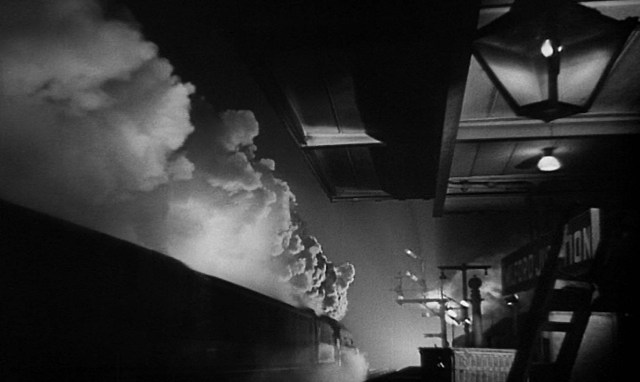
Scene from Brief Encounter

While these machines express drama, technical progress over time leads to greater efficiency, more power, and ironically, less drama.  People think of a steam train as romantic because it gives a visual and audible display of power. A steam engine ready to leave a station, hissing, burbling and smoking, appears to be working hard just standing still.  Modern locomotives turn all that wasted energy into efficient movement, with the result that they are not as theatrical. A step forward in power tells less of a story, because we cannot see the power.

The sport of Formula 1 motor racing is facing difficulties for just this reason. The future for car technology is clearly electrical.  Hybrid technology is already widely used, with fully electric cars ready to break into the mass market. This is a problem for motor racing, which as a form of dramatic entertainment has not only to use energy, but also demonstrate it.  Formula 1 has always been a place to push the boundaries of automotive expertise, until it reaches a point when that expertise becomes quiet and undemonstrative. It is more difficult to create a narrative of sporting drama out of efficient, silent electric engines, than from howling V10s.

Formula E Car

A Formula E electric racing car

It will make no sense for motor racing to stand still while cars in general move forward into an electrical future.  The sport will have to follow wider trends, just as trains moved on from steam. Most people watch motor racing on television or some other electronic device, where noise doesn’t really register. Maybe a dominant electric series will find its place in a world of electronic media, using communication technology to express drama in innovative, immersive ways.

The moral of this tale is that technical development prioritises efficiency:  narrative development prioritises wasteful drama.


Rural Rides on the Medway Bike Path

IMG_0449

“From Maidstone to this place (Merryworth) is about seven miles and these are the finest seven miles I have ever seen in England or anywhere else.  The Medway is to your left with its meadows about a mile wide… From Maidstone to Merryworth I should think that there were hop gardens on one half of the way both sides of the road.  Then looking across the Medway you see orchards and hop gardens two miles deep, on the side of a gently rising ground.”

This is from the classic nineteenth century travelogue Rural Rides, written in the 1820s by MP, farmer and journalist William Cobbet. Although the hop fields Cobbett wrote about have gone, those mile wide Medway meadows are still there, now given over to pasture, orchards, gardens and parkland.

IMG_0458

Cobbett’s route took him along what is now the A26.  Although I often think of Cobbett as we drive along the A26, this busy, modern road makes it difficult to get back to his nineteenth century idyll.  There is now, however, another option.  I would suggest taking the recently opened foot and cycle path, which starting from Aylesford continues through Maidstone riverside, and then runs below the A26 to Barming.  I might not be Cobbett, but I’m going to say that this is a fine seven miles of bike path.  The riding is easy and flowing, the Medway Valley scenery beautiful and varied.  Cobbett would have loved this rural ride.

Best of times worst of times – The 100 best novels in English

IMG_0334

I am working my way through the Modern Library’s Top 100 Novels in English, enjoying it, but not because these novels really are the best of all time. This is just a way of reading things I might not otherwise think of. Rather than putting books in a special box, it’s a way of getting outside the box of my own preferences. I think it is important to approach the list in this way, because efforts to create best of all time lists have always caused problems. For example, back in the Asia of 2000BC, medical progress ran up against the sanctification of ancient medical texts. Written in Asia around 2000BC, The Yellow Emperor’s Inner Canon of Medicine, and The Divine Husbandman’s Materia Medica, had the status of scripture.  In the face of these unchallenged medical authorities, no research or progress was possible. A similar thing happened when Renaissance scholars sanctified the medical writings of the ancient Greek world.

Another example of a “Top 100” gaining untouchable status is The Bible. For centuries, it wasn’t even possible for most people to read the stories collected in The Bible, written in Latin and protected by a possessive Church hierarchy.  The sixteenth century brought the Bible-reading enthusiasms of Protestantism, and large scale printing technology, but The Bible remained set apart, a situation that continues to this day. I remember on one of my first days at university in 1983, going into the University Bookshop to buy books for my course. Aware that The Bible was the most influential book in English literature, I added a copy to a pile of other books.

“You won’t find that on any reading list,” said an assistant with airy superiority.

He really did not want to sell it to me, seemingly offended to see this fat, brown paperback perched on top of The Iliad.  I thought this odd and said so. He was right though. My university did not include the most influential book in English literature on any literature course. The Bible was something different, something other than “normal” literature, too special for students to read in the same way.

While The Bible sat in its little box, writers got on with the business of exploring life in more lowbrow forms, such as plays performed in unfashionable parts of London, in novels or poems.  Inevitably, however, over time these literary forms themselves gained a level of sanctification. The nineteenth century poet and schools’ inspector Matthew Arnold decided in a famous essay called Culture and Anarchy that literature could work with religion as a “social cement”. With Arnold’s enthusiastic support, “English literature” really came into being as an adjunct to official religion. The poet William Blake saw The Bible as the work of poets, usurped by the Church for its own purposes. He feared a similar fate for the poetry of his own time. The influential views of Matthew Arnold, and others like him, meant that in many ways those fears were realised. A sad result of official veneration was to make literature, by definition, difficult, the opposite of “easy reading”. Hard labour was required if English was to seem a respectable academic subject, and in this way literature was taken away from the people it was written for. Literature became something different, set apart, just like The Bible.

I am enjoying the Modern Library Top 100, but in conclusion, it is worth noting that one of the books I have read so far- The Ginger Man by J.P. Donleavy suffered a ban when first published.  This book was clearly on someone’s “Worst Novels of All Time” list. This just goes to show that throwing up a wall around certain writing is impossible. Good writing tears down walls, mines the depths beneath them, or jumps mischievously over them. It does not build them.