The Mystique of Music in the Age of Streaming

I’m reading Sophie’s Choice, William Styron’s famous novel about Stingo, a struggling writer who meets a beautiful concentration camp survivor in the New York of 1947.  Stingo has learnt about Sophie’s terrible ordeal during the Second World War. Sophie has also described her experience of reaching America, where two things define a better life – plentiful food and music.  Following a doctor’s advice not to gorge herself on food, Sophie revels carefully in all the gastronomic variety that New York has to offer.  In the same spirit of heightened appreciation, she goes to hear Yehudi Menuhin play the Beethoven Violin Concerto at Lewishon Stadium in Manhattan.

The day after I read this section, I put Beethoven’s Violin Concerto, played by Yehudi Menuhin, on my phone and took it to work.  I tried to imagine what it would sound like if I hadn’t been able to listen to music for years.  Rather than existing in glorious isolation, music is also a product of the situation of the listener, a situation often engineered to increase the power of the musical experience. In the case of orchestral music, there’s the buying of an expensive ticket, the dressing up, entering a beautiful hall, the cacophony of many musicians tuning to a single reference note, the tapping of a baton on a podium to bring the orchestra to attention. This all has the effect of shutting music away behind a ritual.  Listeners have to approach carefully with a sense of reverence for the importance of what they are to experience. Other genres had their tricks, from the artful secretiveness of Prince, to the courting of controversy by Frankie Goes to Hollywood, which leads to a ban serving only to boost sales.

In some instances, this wrapping of the musical experience has amounted to an art form in itself.  Take for example Miserere Mei Dues written by Gregorio Allegeri around 1640. Religious authorities literally kept this piece locked away, securing all copies of the sheet music in the Vatican vaults.  There was only one performance a year, at the Sistine Chapel, no less.  In 1770, however, a young musical genius called Amadeus Mozart heard Miserere Mei Deus, immediately memorised every note, carried them home in his head and wrote them down.  Mozart’s theft was part of a chain of events, making music ever more accessible, eventually allowing me to take Beethoven’s Violin Concerto to work on my phone. It is wonderful to have this easy access to music, but even imagining years empty of music made it sound better.


Since music streaming cannot offer unlimited access and the denial of access at the same time, I suggest attempting to imagine a world where music is hard to find.

.

The Heroism of Antiheroes

img_0162

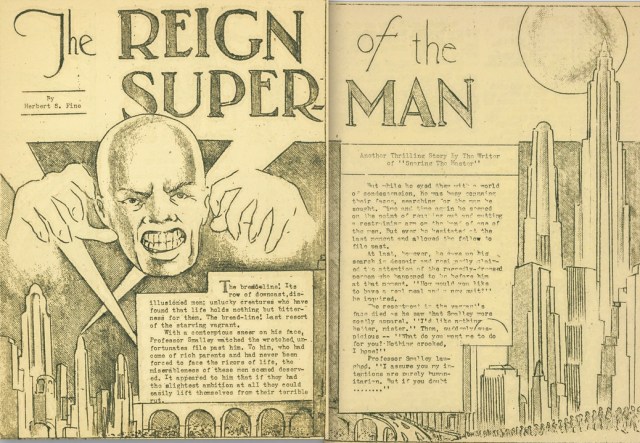
An early Superman story, self-published by high school students Jerry Siegel and Joe Shuster in 1933

People like to identify with a central character in a story.  Often they want to identify with someone strong and powerful.  Most people, however, are sensible enough to realise that we are not all world-conquering heroes, not every day anyway.  It then makes sense for antiheroes to shuffle out of the shadows – characters who we can identify with in their weaknesses.  There are examples going all the way back to ancient Greece.   The Iliad, dating to around 700BC, is generally peopled with gods and supermen, but there is a minor character called Thersites, lame, round shouldered and ugly, who speaks unpalatable truths and gets shouted down for it.  Aesops Fables dating to around 600BC contains many unlikely heroes, including a tortoise who wins a running race against a hare.  From the time of ancient Greece onwards, less than epic characters continued to make various apologetic, ill-mannered or clumsy appearances.  There was the delusional Don Quixote in the seventeenth century,  Lawrence Sterne’s mischieveous Tristram Shandy in the eighteenth century, and the helpless, beaten down, twentieth century protaganists of Beckett, Kafka, Camus, and Jean Paul Sartre.

So, what happened when antiheroes shambled diffidently over to America, land of winners?  Like the ancient civilisations of the Mediterranean, America following World War II, was the world’s leading power  It made sense that post-war America created modern versions of Greek and Roman heroes.  Building on the costumed adventures of the Scarlett Pimpernel (1903), Zorro (1919) and Shadow (1930) the superhero leaps into existence to save the world as Superman in 1938, with Batman coming to help in 1939.  The link with ancient heroes is made obvious in Wonder Woman.  Debuting in 1941, authors William and Elizabeth Marston conceived Wonder Woman as a demigoddess, a new Diana with powers conferred by old Greek and Roman gods.  So are these the heroes of a society considering itself so powerful that it can turn its back on failure and smallness?

The answer to this question has to be, no.  Crucially, modern superheroes have an antihero behind the costume, an ordinary alter ego.  Superman out of costume is mild mannered Clark Kent, a reporter working for the Daily Planet.  Batman is the crime fighting incarnation of eccentric and emotionally damaged billionaire Bruce Wayne.  Wonder Woman hides in the identity of Diana Prince, a United States Army nurse.  This duality would become a typical feature of superheroes, a particularly telling twist coming along in 1962 with the arrival of Spider-Man, the alter ego of orphaned adolescent Peter Parker who faces problems of rejection, inadequacy and loneliness.  These non-heroic alter egos parallel many American literary and movie antiheroes  – Dean Moriarty in On The Road, Holden Caulfield in Catcher in the Rye,   Jim Stark in Rebel Without a Cause and Johnny Strabler in The Wild One.  While these characters are an inversion of Superman, they are actually exploring the same territory from the opposite direction.  Their primary identity is as ordinary people, who search for heroes hiding inside themselves.  Holden Caulfield is not so different to Peter Parker.  Johnny, the motorcycle gang leader in The Wild One, even dons a kind of superhero outfit, the black leathers which make him into a different person during his weekend road trips.

The different sides of heroism then come together with an almighty bang in the hugely successful modern tale of good and evil, Star Wars.  In Star Wars, the mystical Force gives strength to both the heroic Jedi, and to the Jedi’s dark enemies.  The Force is vague enough to encompass heroes and villains, and people like Han Solo who are neither one nor the other. Star Wars crystalises the suggestion that amidst the primary colours in Marvel comics, and the black and white of Obi Wan and Darth Vadar, there is no easy division of the world into hero, villain and ordinary person.  The endless struggle of people to see a better version of themselves, while still accepting their humble, imperfect reality, reaches a contemporary high point in the multifaceted heroes of American culture.

As writers, we can learn from this. There are two kinds of protagonist- a hero with an ordinary person inside them, or an ordinary person hiding a hero.

Orwell and Tarkington In Support of American Journalists

the-magnificent-ambersons-1918-fe

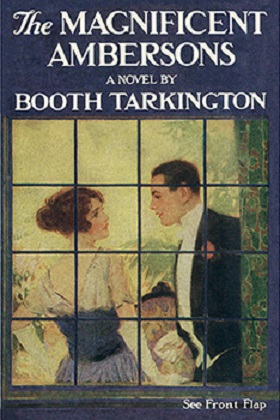
Sales of George Orwell’s novel 1984 are apparently increasing in response to events in the United States. Orwell’s Doublethink and Two Minute Hate readily lend themselves to parallels with “alternative facts” and the whipping up of hatred against perceived “others”. But it’s not only a writer like Orwell who we can turn to for enlightenment. Any writer with a eye to human nature could help us. I’d like to refer you, for example, to Booth Tarkington, Princeton Graduate and author of the novel The Magnificent Ambersons. Wealthy, patrician, conservative Tarkington seemingly has little in common with Orwell; but yesterday I read the section in The Magnificent Ambersons where Eugene Morgan tries to help his daughter understand the characteristic combination of arrogance and inability to accept criticism. Eugene’s observations will strike a chord with any number of contemporary American journalists:

“That’s one of the greatest puzzles of human vanity, dear, and I don’t pretend to know the answer. In all my life, the most arrogant people that I’ve known have been the most sensitive. The people who have done the most in contempt of other people’s opinion, and who consider themselves the highest above it, have been the most furious if it went against them. Arrogant and domineering people can’t stand the least, lightest, faintest breath of criticism. It just kills them.”

In Praise of King Log

aesop-fables

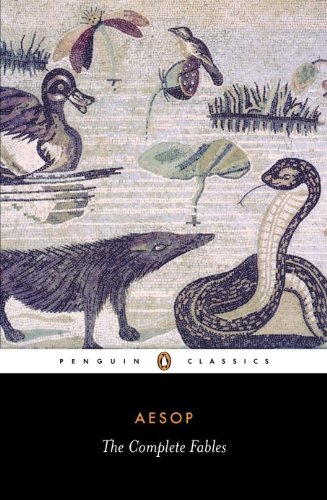
Since the earliest days of organised human society, people have recognised the value of a leader who does little.  One of Aesop’s Fables dating from the sixth century BC, has advice for a populace who think a strong leader is the answer to their problems.  In The Frogs Who Demanded a King, a group of frogs irritated at their disorganised manner of life, ask Zeus to provide them with a king.  In response, Zeus throws a lump of wood into the frog’s swamp.  The noise scares the frogs, who hide beneath the mud. Eventually realising the lump of wood is not actually doing anything, they emerge from their hiding places, sit on their king and complain to Zeus.  This time Zeus sends a water dragon as the frog king, who proceeds to eat all his subjects.

Many leaders, particularly in Britain, have tried to be a lump of wood rather than a water dragon.  Queen Elizabeth I, one of the country’s best-known monarchs, was famous for doing as little as she could get away with, particularly with regard to warfare.  Later in history, this policy of calm inaction would become the guiding philosophy of the British monarchy. Queen Victoria was the first officially non-active constitutional monarch.  Her Prime Minister, Lord Melbourne, tutored her in this policy; and Melbourne himself – as Dorothy Marshall has written – “had the capacity to do absolutely nothing unless driven, and then do as little as possible.”  Melbourne worked in a tradition set by Robert Walpole, the man often seen as Britain’s first Prime Minister, who with his “calculatedly uneventful administration,” dominated Parliament for twenty years through the 1720s and 1730s.

In the subsequent history of British prime ministers, there are many examples of wise attempts to do as little as possible.  Henry Addington, prime minister 1801 – 1803, provides one telling example.  After peace negotiations with France failed in May 1803, Addington followed the safe but unspectacular course of doing nothing.  Napoleon’s army was sitting in France ready to invade, but if it tried to do so, the Royal Navy was waiting for them.  If only Britain could continue to do nothing, then Napoleon’s army sitting around on the French coast would be defeated either by disease and indiscipline; or by lunging over the Channel in frustration, straight into the waiting guns of British ships. Waiting made perfect sense, but was not popular. Addington’s term did not last the year.

Perhaps Addington made a mistake in failing to combine his non-action with fighting words.  However, even fighting-talk prime ministers are not as active as they seem once you get passed all the words. Winston Churchill might appear to provide definitive active leadership, with his blood curdling speeches of resistance in 1940. In reality, he wisely left most of the actual running of things to others.  The occasions when he interfered did not tend to go well.  It was fortunate, for example, that Air Chief Marshall, Hugh Dowding, talked Churchill out of sending the RAF to its destruction in the Battle for France.  Only because of Dowding’s actions did Britain have the aircraft to allow Churchill to make his famous speeches during the Battle of Britain.

Wisdom coming down to us from the sixth century BC is more relevant than ever.  Political leadership is often at its best in providing a calm centre as King or Queen Log, rather than contributing to the chaos as King or Queen Water Dragon.  The frogs should be careful what they wish for.

Animal Stories – Bringing the Gods to Earth

dragon-liber-floridus
A naturalistic dragon portrayed in the Medieval Liber Floridus enclylopedia – 1460

Animal stories; I was suspicious.  Then, after inconveniently having an idea for a story about dogs, I decided to have a look at them.  Animal stories have a very long history.  Aesop’s Fables, a collection of sixth century BC short stories, one-liners and aphorisms, is full of animal characters – hens laying golden eggs, hares racing tortoises and so on.  The animals lend an elemental quality to the stories – the sense that earthy, fundamental truths are under discussion.

Fittingly for stories about fundamental truths, it seems that during the evolution of the Fables, the original characters switched from gods to animals.  Some Aesop scholars think this may have happened to make the spiritual world of gods more accessible to an earth bound readership.  Some of the Fables actually involve mythic animals, which exist halfway between the world of gods and man – the halcyon bird for example.

This sense of the elemental and the spiritual continues in animal stories today.  There are of course children’s stories, in which authors such as Beatrix Potter and A.A. Milne explain down to earth truths through rabbits, bears, kangaroos and pigs. At the literary end of the scale, you have a story like Jack London’s The Call of the Wild, about a pet dog who regresses to its original wolf nature.  Jack London sets out to explore basic themes of life, death and survival.  There is also that characteristic spiritual quality, where animals are close to gods.  Buck the dog actually becomes a god to the indigenous Indians of the valley where he takes up residence with his wolf companions.

Thinking of a modern take on animals inhabiting the realm of the gods, there is the interesting case of the dragon.  The dragon is similar to a halcyon bird in that both are mythical creatures, sitting halfway between the earthbound world and the fantastical godly realm. Dragons play an important role in the hugely successful books of Tolkien.  They also reappear in more recent fantasy fiction by, for example, George R.R. Martin, Robin Hobb or Patrick Rothfuss.  Patrick Rothfuss is especially interesting in this regard, since his dragons move closer to the status of earthbound animals, with a Latin name and reasonable explanations for their fire breathing abilities.

Animal stories today continue to fulfill the role they played thousands of years ago, revealing basic truths, and bringing the world of spirit and fantasy down to earth.

Points of View

the-garden-party

In modern fiction, the rules of point of view are generally strict.  You either write in the first person – “I did this, I looked at that,” and keep to it throughout; or you write in the third person, through a particular he or she, with only sparing excursions to the viewpoints of other characters.  

But there are writers who don’t do this, and Katherine Mansfield is one of the best when it comes to clever use of changing point of view.  Sent by her prosperous New Zealand family to a finishing school in London, she was meant to imbue a smattering of literature suitable for a polite young lady.  Unfortunately she developed a genuine passion for books and art.  Returning to New Zealand in the early 1900s she became unmanageable, had a few lesbian affairs, and ended up living a Bohemian life back in London.

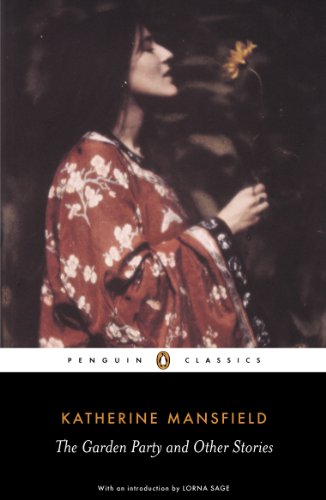
This is by way of introduction to a striking use of point of view I have just come across in a Katherine Mansfield short story called At The Bay.  Early in the story we join Stanley Burrell who has got up early, and is off for a swim in the sea before work.  We quickly  see that Mr Burrell is a stuffy character who likes everything just so. He doesn’t want to be disturbed in his swim by the easy-going Jonathon Trout.   Point of view flits around between the two men, until Stanley goes grumpily back to his house and moans about not finding his bowler hat and walking stick in their rightful place.  We see him from Aunt Beryl’s point of view, only to be dragged back into Stanley’s panicky mind as he searches for hat and stick.

Then he finally leaves for work.

“The relief, the difference it made to have the man out of the house.”

I felt the relief in switching to the perspective of Beryl and then to that of the serving girl Alice.

For most writers switching point of view creates confusion, and interferes with the process of getting involved with a character.  Remarkably, Katherine Mansfield actually disregards this rule to increase involvement, to experience the relief of a sudden liberation from a certain way of looking at the world – as she herself experienced in breaking from her finishing school education. She makes you realise that sometimes people see the world not through their own eyes, but through those of someone more dominant.  When that person leaves, the world looks different.

It does make you wonder whether our intolerance of alternative view points in fiction reflects a certain Stanley quality in us all.


Loss of Innocence

age-of-innocence

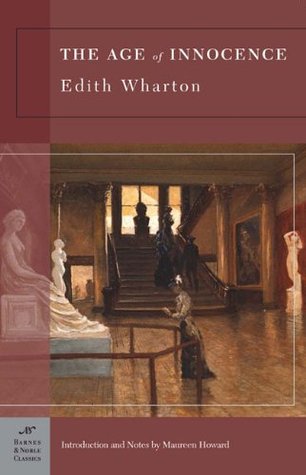
As America inaugurates its new president I’ve been reading Edith Warton’s The Age of Innocence.

The Age of Innocence portrays New York society in the 1870s, just before the advent of the modern age. Life is hemmed in by social niceties. By the end of the book, however, there is proof of the old truth that restrictions we struggle against when young, leave a hole when they are gone. 1870s New York for all its hypocritical tendency to gloss over truth, understands human nature. Citizens in the environs of Washington Square work as a team to corral humanity’s wilder impulses and unpredictability. And of course, within a few decades those wilder impulses were to destroy the Europe where New Yorkers purchased their dresses and took their cultural holidays.

The Age of Innocence is beautifully written, portraying a lost world with a wonderful eye for detail. Like 1870s New York itself, the story plays out elegantly, with huge emotion struggling beneath the surface. That’s what I liked most about the book. I’d just come from a modern story where the emotion was in your face, and the violence graphic. The contrast with The Age of Innocence was striking, and I have to say, welcome. There is violence, but it sits tightly controlled in a social pressure cooker. There is emotion, but it is subdued like a wild horse broken by a trainer. There are victories without cheering, and shattering defeats that pass without tears.

The Age of Innocence New York becomes more relevant to the modern age the further it disappears into the past. It sits there as it did in Newland Archer’s memory, deeply imperfect while he lived it, but providing a counterbalance to the modernity that replaced it.

The Month of Janus

220px-janus1
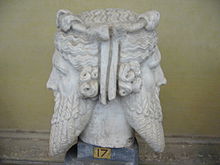
A statue representing Janus from the Vatican Museum (Photo by Loudon Dodd)

The month of January takes its name from the Roman god Janus. If you’re feeling confused at the beginning of the new year, then Janus is the god for you. In Roman mythology he was the ruler of both endings and beginnings. Just for good measure Janus was also in charge of transitions, of the middle ground, between such opposites as barbarism and civilisation, city and countryside, or youth and adulthood. So you could say he was in charge of everything.

Out with the old, in with the new, business as usual – it was all the same to Janus.

Janus was not the senior god of the Roman world, but he was perhaps the most powerful. He had to be called upon at the beginning of every religious service involving any other god. After all he ruled gateways, including the door through to the godly realm. Whether you are dealing with endings or beginnings or anything in between, January is named after a god who kept an eye on all those things, and treated them just the same.

Happy new year


The Tolling of the Bell at New Year

ernesthemmingway_forwhomthebelltolls


As 2016 ended, I decided to read Ernest Hemingway’s famous book about the Spanish Civil War, For Whom The Bell Tolls.  On the first page, he quotes those famous lines from John Donne:

No man is an island,
Entire of itself,
Every man is a piece of the continent,
A part of the main.
If a clod be washed away by the sea,
Europe is the less.
As well as if a promontory were.

In 2016, as part of a worldwide trend towards division, the UK was a clod washed away by the sea.  Teresa May has since told us to be unified, but at what stage does a group of people become unified?  At what point do borders truly reflect the oneness of the people within them, so that they can say, “this is who we are”?

Reading Hemingway I would say, never.

The novel’s central character is Robert Jordan, who in an earlier life taught Spanish at an American university.  Now like many other idealistic young men in the 1930s, he has joined the International Brigade of volunteers fighting the fascists in the Spanish Civil War.  He has gone behind enemy lines to help a partisan band of republican Spanish.  Finding a situation that is not exactly black and white, he reflects on how hard it is to find unity amongst people:

“Of course they turned on you.  They turned on you often, but they always turned on everyone.  They turned on themselves.  If you had three together two would unite against one, and then the two would start to betray each other.”

That is the reality of people living together.  There is no final cohesive unit of humanity.  People chase after a secure sense of identity when such a thing does not exist.

The book pulls apart all the usual ways people consider themselves to be together.  National identity means nothing; comrades in a life or death struggle seem just as likely to shoot each other, as they are to shoot at the enemy.  Even an individual seems divided.  Robert Jordan has many arguments with himself.  But set against all this are moments which can only be described as transcendent in the unity they describe. These blissful interludes involve a love affair between Robert Jordan and Marie, a young woman the partisan band have rescued from fascist captors during a raid on a train.  The pressure of the situation drives these two together, so that in them we see the other side of the coin. Unity can exist in division.

In a world that wants to divide itself in pursuit of identity, For Whom The Bell Tolls should be required reading.


The Handmaid’s Tale and Fundamentalism

handmaids_tale

I’ve just finished the Handmaid’s Tale, Margaret Atwood’s famous dystopian novel published in 1985.  Once I recovered sufficiently to think straight, I decided that, for me, the Handmaid’s Tale is about fundamentalism. It describes a society which thinks that certain truths do not change, as though you can brush your teeth and drink orange juice just afterwards, and the orange juice will always taste like orange juice.

Religious zealots have taken over the government of America.  They respond to the ills of modern western life, both moral and physical, by creating a society of merciless rigidity.  A falling birth rate has resulted in the creation of a caste of women called Handmaids, used by powerful men to bear children for them.  The narrator is one of these unfortunate women.  From her perspective, little things we take for granted look very different.  For example, she plays a secret game of Scrabble. While for us Scrabble is harmless fun, in the dark Handmaid future, such apparently spurious ways to pass the time are outlawed. Scrabble is a forbidden pleasure, akin to drug taking.

For the Handmaid, telling a story becomes, like Scrabble, something dangerous.  Telling a story is about communication, something that can only happen when there are different points of view to share.  In the Handmaid’s world there is only one point of view, that of the government.   For them orange juice always has to taste the same, whether you’ve brushed your teeth or not. So there are no books and no writing.  Books suggest that there are other equally valuable truths out there.

The Handmaid’s Tale is a fascinating, scary and all-encompassing meditation on social ills, with the book itself becoming part of the struggle it describes. It deserves its status as a modern classic of speculative fiction.