The Fundamentalist Within

Reluctant_Fundamentalist

The Reluctant Fundamentalist is a one sided conversation between a Pakistani professor named Changez, and an unnamed American, taking place mostly in a street café in Lahore. Changez describes an education at Princeton, a subsequent short career at one of New York’s top business consultancies, a love affair with a beautiful American girl, and his eventual disillusion with the United States. All of this happens around the time of the 9/11 attacks on the World Trade Centre and Washington.

The conversation is enigmatic. Changez is a delightful host, unfailingly polite and obliging to the suspicious, surly American, who, we infer, is clearly worried that this whole conversation is some kind of set up. Is he imagining these threats? Is he ruining a lovely meal with a charming man due to some kind of delusion?

These is much delusion in this book. We see characters who classify fundamentalism as an insane state of mind confined to a few crazy religious people who come from somewhere vaguely east. Changez’s story, however, makes it clear that there are all kinds of fundamentalism, ranging from the business philosophy of New York consultancy firms, to the idealised love affairs of vulnerable young women. Confining the idea of fundamentalism to one set of circumstances and people is a fundamental misunderstanding.

The result of this misunderstanding is a kind of paranoid delusion. Just as Changez’s American dining companion imagines an attentive waiter as a possible assassin, America itself became delusional about terrorism after 9/11. The 9/11 attacks led to the deaths of 2990 people, which it goes without saying was a terrible thing. From 2001 until 2013 there were a further 390 American deaths from terrorism, almost all of them overseas. This compares to 406,496 deaths from American firearms in the same period – according to figures from the Centers for Disease Control and Prevention at the U.S. State Department. Deaths caused by Americans shooting themselves and each other, are 100 times greater than those resulting from terrorism. Yet it is the terrorist threat that Americans fear, while their own far more lethal guns and attitudes are expressions of “freedom”. The aim is always to find an outside threat, some other people to count as crazy fundamentalists. Changez tries to explain this to his guest:

“As a society… you retreated into myths of your own difference, assumptions of your own superiority.”

This trend is only gathering force. CNN compiled the above comparison figures for terrorist and American gun related deaths in 2015. They did so at the encouragement of President Obama, following a mass shooting at an Oregon college. In 2016, millions of Americans decided it was a good idea to replace President Obama with a man who is only interested in creating outside threats against which he can rage.

All of these delusions sit behind the fictional, enigmatic meal shared by Changez and his American guest. Is this a peaceful meal or an attempted assassination? If the American’s suspicions are misplaced, might those suspicions themselves result in real trouble? Similarly, Pakistani fears could themselves lead to a violent outcome. Is the American reaching into his pocket for a phone or a gun? Is it wise to wait and find out? This might only be fiction writing, but this is a good place to explore the dangerous power of fictions as they collide with the real world.

The Reluctant Fundamentalist reminds me how important books are. This book is even more significant now than it was when first published in 2007. Books challenge stagnant patterns of thought and open up different points of view. Perhaps that’s why totalitarian leaders don’t like them.

The Artist Formerly Known As…

Love_Symbol_Album_(Prince_and_the_New_Power_Generation_album_-_cover_art)

I have been writing about band names lately.  Maybe now we come to the point where names reach their limit.

Naming sets boundaries. This has a practical purpose in classifying and organising. A group of musicians, for example, need to identify themselves on posters, on listings for Apple Music and Spotify. But some musicians have, nevertheless, tried to escape the limits of a name.  There have been non-names, such as The Band, or The The. Prince went a step further and tried to identify himself with an unpronouncable symbol.

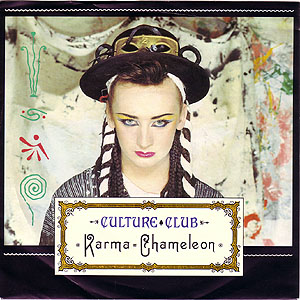
Although, fortunately, most musicians don’t go as far as Prince, there is a characteristic desire for musicians to identify themselves with ambiguous names, which try to escape easy classification. Let’s finish with some names that tried to be vague enough to include us all. Culture Club had a gay Irish vocalist, a black London-born bass player, a blonde English guitar and keyboard player, and a Jewish drummer. This band included all kinds of people representing all kinds of cultures. Culture Club, however, remains a name. Even a group of different cultures has an identity from which some will want to escape.  A Culture Club, inclusive though it is, probably wouldn’t be a comfortable place for the people who seek the apparent security of one culture – as perhaps the culture club of the EU is finding to its cost. The Human League has a similar irony, a league including all humans, except those who don’t want to be lumped with all other humans.

Culture Club

A name is always going to have limits. You can’t escape that, not even by adopting an unpronounceable symbol: you’re just given an unwieldy name that begins The Artist Formerly Known As… Since escaping names is impossible, the only real option is to find a good one, which suggests both identity and something bigger than identity. You could become Procol Harum, which seems to mean something but actually doesn’t mean anything. Alternatively, there’s Pink Floyd, The Who, Mott the Hoople, or Aztec Camera.  You could choose Blur – is that a word referring to something moving fast, or a non-word denoting boredom?  Alternatiely, there’s Oasis, which in suggesting a few trees, also suggests a much bigger desert.

So, what have band names taught us?  That have shown that people have an instinct to name, to limit, even something as amorphous as music.  They have also shown that names truly catching the imagination are those that try to escape identity through enigma and ambiguity.

So whether you’re headed to Heaven 17, or taking a lift to Level 42, or going on a Snow Patrol, or booking tickets for a Show of Hands, a good name suggests some other place to go when you get there.  Hope you’ve enjoyed the trip.


T. Rex – Abbreviated Rock

Trexmetalguru

Exploring language via band names.  This week – T. Rex.

Between 1967 and 1969, Marc Bolan led a psychedelic folk group called Tyrannosaurus Rex, which didn’t do very well.  In 1970 Bolan moved to an electric sound, and modified the band’s name slightly. T. Rex went on to become one of the most influential forces in 1970s rock.

T. Rex was a better name than Tyrannosaurus Rex. Let’s have a think about why that should be.  T. Rex is an abbreviation, where letters are missed at the end of a word. Abbreviations can also take the form of contractions, omitting letters from the middle of a word, as in Mr; or an acronym, where different words are formed into a single set of letters, as in USA. All these reductions of language have the same sort of effect. They concentrate long, complex ideas into something short and pithy; or bring diverse things together into one whole.  They also tend to create a sense of excluding outsiders – taking the form of a simple code, there’s a suggestion of secrecy, belonging, exclusivity and power.  It’s no surprise that many countries have been identified by abbreviations – USA, UAE, USSR, GDR, UK, DPRK.  It’s also no surprise that abbreviations are popular with the military, in management speak and in the titles of academia.  Ironically, there can also be an informality associated with shortened language, as any experienced Twitter user would know.  But the basic rule of differentiating a group still applies.  The most casual of Twitterspeak serves the same purpose as the most clipped of military acronyms.

Bands that use abbreviations in their names tap into all of this. There are many examples – AC/DC, R.E.M., ABBA, REO Speedwagon, Booker T and the M.G’s, Guns N’ Roses, INXS, CSNY, OMD, ELO, 10cc, U2, JLS, AWOLNATION. The power of the abbreviation effect is illustrated by the fact that removing one letter can make all the difference.  Led Zeppelin dropped a single a. The Lovin’ Spoonful dropped a single g.

Acdc_logo_band.svg

The AC/DC logo designed in 1977 by Gerard Huerta (Image attribution)

Such is the attraction of elision that sometimes band names not intended as real abbreviations have been treated as such by imaginative fans, or by suspicious moral guardians.  KISS was not an acronym, but that didn’t stop people finding Kids in Satan’s Service hiding in those four letters.  The heavy metal band W.A.S.P. only put full stops between the letters of their name because they thought it looked cool.  They left interpretation of their meaning to both their fans and detractors.

So there you have it – T. Rex has a louder roar than Tyrannosaurus Rex.  That’s the power of abbreviation as illustrated by band names.

The Comedy of Errors

img_0604

Watching The Comedy of Errors,  Battle Abbey,  East Sussex

Last night, in the grounds of Battle Abbey, I saw the wonderful Lord Chamberlain’s Men performing Shakespeare’s The Comedy of Errors.  It was great fun, two pairs of twins getting into all kinds of confusion. It might seem wrong to analyse such carefree entertainment, but as the dusk drew in, and a creamy moon rose over the action of a hectic day in Ephesus, the effect was so striking that not to give this play some thought seemed disrespectful.

So there I sat in my fold-up chair, pondering on this lovely play while doves cooed from hidden perches in abbey stonework.

The play opens with the arrest of elderly Syracusan trader, Egeon, following the discovery of his unauthorised presence in Ephesus.  Syracuse and Ephesus are at war, and strict law forbids Syracusan merchants from entering the city of their rivals.  Egeon can only escape a sentence of death by paying a fine of a thousand marks. He then tells his tragic tale to Duke Solinus who sits in judgement on the unfortunate man’s case.  In his youth, Egeon explains, he and his wife had twin sons, both called Antipholus. On the day of their birth, a poor woman lacking the means to raise children, also gave birth to twin boys, both called Dromio. Egeon purchased these boys as slaves to his sons. Soon afterwards, the family made a sea voyage, which was hit by a storm. Egeon lashed himself to the main-mast with one son and one slave, while his wife lashed herself to a separate mast with the other son and slave. His wife was rescued by one boat, Egeon by another, which resulted in the boys and their slaves living separate lives in Syracuse and Ephesus.  When the Syracuse Antipholus reached adulthood, he decided to set out with his Dromio on a quest to find their twins. When they did not return, Egeon went in search of them, a search which eventually brought him to Ephesus where he now sits at the mercy of the Duke’s judgement.  The Duke is so moved by Egeon’s story that he grants him one day to find someone in the city who can help pay his fine. Though this seems like a lost cause, Egeon is unaware that Syracuse Antipholus, pursuing his quest,  has just arrived in Ephesus.  That’s when the fun begins as the brothers are mistaken for each other by various citizens of the city.

For some reason, as I watched all this, an odd detail from the world of biology popped into my mind, the fact that the most intense competition in nature takes place between similar organisms, as they compete for the same niche. Antipholus of Ephesus and Antipholus of Syracuse are identical, but their cities are at war.  All of the confusion of the play is due to the twins’ similarity rather than their differences. This was an interesting thought on a peaceful summer evening. The world seems particularly divided at the moment, but at the end of the play as confusion is resolved and brothers are reunited, the essential similarity underlying division came to the fore.

I to the world am like a drop of water

That in the ocean seeks another drop


Spiders, Crickets and Beatles

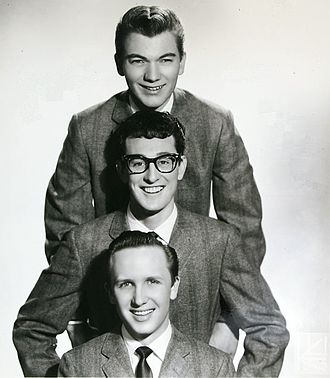
Buddy_Holly_&_The_Crickets_publicity_portrait_-_cropped

Buddy Holly and the Crickets in 1958

As part of my series of articles on band names, I thought it would be interesting to go back to the beginning of the band name itself.  The folk music of American immigrants from Europe, known as Hillbilly, threw up a few interesting group names in the 1930s – notably the Skillet Lickers.  Primarily, however, Hillbilly, or Country as it was known from the 1940s, was a style based around individual singers.

More influentially, into the 1950s  black R&B musicians in the United States started adopting quirky collective nouns – The Orioles, The Penguins, The Crows.  

In Texas, Buddy Holly, dutiful son of a religiously conservative family, secretly listened to black musicians on late night radio. Amongst them was New Orleans vocal group, The Spiders. Later, when he became a musician himself, Buddy had to think of a name for his own group. Using The Spiders’ name as his starting point, he searched through reference books on entomology,  eventually finding his way towards a much less threatening insect, the cricket. Crickets are harmless little creatures, which under the cover of darkness, fill the night with their chirpy sound. The story of Buddy Holly is something similar, the story of a young man using a kind of camouflage to make forbidden music.

This camouflage was vital.  In white dominated 1950s America, the music of black R&B musicians was a symbol of moral threat and a focus for bigotry.  Philip Norman in his biography of Buddy Holly quotes from a leaflet distributed at the time, to restaurants and shops throughout the southern United States:

“NOTICE! STOP! Help save the Youth of America.  Don’t buy Negro records.  If you don’t want to serve Negros in your place of business, then don’t have Negro records on your jukebox or Negro records on the radio.  The screaming, idiotic words and savage music of these records are undermining the morals of our white youth in America.  Call the advertisers on radio stations that play this type of music and complain to them…”

If the Crickets wanted to write and play music inspired by black musicians, they could only do so by hiding in the linguistic long grass.

Abbey_Road_Graffiti_Closeup

Beatles related graffiti – photographed during my visit to Abbey Road in 2005

Buddy Holly died in an air crash in 1959, but the musical force he helped set free continued to develop world-wide. By the early 1960s two young Liverpudlians, John Lennon and Paul McCartney, were trying to think of a name for their band.  As Buddy Holly fans, they naturally followed tracks that Crickets made through dangerous social undergrowth.  They decided to keep with the insect theme and become The Beatles.  While the name Beetles had been on Buddy Holly’s own list of insect related name options, he realised that mainstream taste was not ready. It would take a few more years before Beatles would be acceptable, which even with its musically adapted spelling, suggested darker connotations of scuttle and scurry not seen with crickets.  A style of music once symbolising sin and social breakdown was now becoming an accepted part of global society.  Some bands even felt it was safe to call themselves The Spiders, major examples including a successful Japanese group formed in 1961, as well as a 1964 version of Alice Cooper’s band.

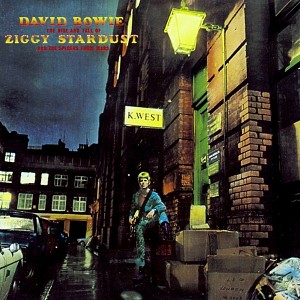
ZiggyStardust

Ziggy Stardust and the Spiders From Mars – one of the first albums I ever bought

The Spiders as a band name probably had its greatest success in 1972, when David Bowie and The Spiders From Mars shot into the rock stratosphere. Now it seemed the world could fully accept a group of musicians named after the kind of creatures that Buddy Holly had to turn into crickets.

The Smiths

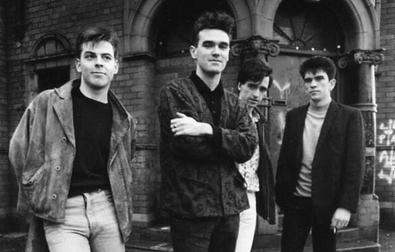
SmithsPromoPhoto_TQID_1985

The Smiths in 1985

Continuing my irregular series of articles on band names illustrating artfully selected words, we now come to The Smiths.  I knew there was a lot going on with this name, so I read Johnny Rogan’s massive Smith’s biography The Severed Alliance. And after reading all those hundreds of pages, I came to the conclusion that the two words The Smiths used to identify themselves might qualify as their definitive achievement.  This comment is not as flippant as it might seem. During his 1970s schooldays at a tough Manchester secondary modern, future lyricist and lead singer, Steven Morrissey retreated to his bedroom, taking refuge in the music of Sandie Shaw, Cilla Black, Marc Bolan, and the New York Dolls. With vague creative ambitions of his own, young Morrissey would enjoy making up clever book titles and chapter headings for novels that never happened. Morrissey seemed better at the flash of insight rather than the long slog of consolidation.

Once he left school our unlikely hero joined forces with guitarist Johnny Marr, and against all odds became a singer songwriter himself. At this point, Morrissey came up with his best title ever – The Smiths. The name implies so many things. First, there is that sense of a back to basics approach, as a reaction to glam rock, or pompous concept album rock. Yet this is not back to basics in the sense of a Punk band thrashing around on instruments they learnt to play last week. Instead, there is a suggestion of artisanship. A smith labours in a sweltering smithy, making horseshoes and ironwork. This is a person who upholds traditional values of application and honest service.

At the same time, there are darker undertones to explore. Originally, the band considered the name Smiths Family. The word family implies togetherness. Think of The Partridge Family – sunny and happy on a bus with David Cassidy, his mom and cute siblings. The Smiths, or The Partridges, divested of the word family, conjures more of a vision of one of those clans who fight amongst themselves, using any energy left over to terrorise their local area. The Smiths had much of the anti social behaviour order about them. Their shows were famously rowdy, with Morrissey welcoming a good stage invasion.  He could also be relied upon to provide controversial quotes, supporting the violence of the IRA, or the extreme fringe of the animal rights movement.

The name is also strangely reflective of the times the band lived through. The 1980s was a divided decade. Prime Minister Margaret Thatcher would often refer to her personal values resulting from a Methodist upbringing in a greengrocer’s shop in Grantham – solid virtues of hard work, thrift, and respect for the rule of law. Yet she was also profoundly confrontational, having no time for consensus, compromise or the status quo.

Margaret Thatcher’s hope was that the 1980s would turn Britain into a kind of vastly successful greengrocer’s shop, or smithy.  But there were so many contradictions – the talk of thrift, honesty, hard work, set against the flashy lifestyle and murky ethics of the money-driven society the Thatcher government helped encourage.  There was also that conflict between harking back to supposed traditional values of application, self reliance and the rule of law, whilst also rejecting equally traditional values of respect for compromise and consensus. Amidst the resulting confusion it is perhaps not surprising that the 1980s were violent years defined by miners’ strikes and city centre riots. This was a decade yearning for lost values, even in wanting to tear them apart. By some miracle, all of these conflicting forces were held together, for a few years at least, in The Smiths.


Selfie


Tate_Modern_restaurant_View

A “selfie” of me and my brother taken in a mirror at the Tate Modern, London

A few weeks ago I wrote about the name of the band Blondie, amusing myself by reflecting on the ie ending, which is typically used in words that convey a playful, childlike quality.

While writing that article I started thinking about the word selfie.  This manner of presenting yourself has become hugely popular. On Instagram over 90 million photos are currently posted with the hashtag #me.  According to Wikipedia, the first written use of the word occurred on an Australian internet forum on 13th September 2002, when Nathan Hope wrote:

Um, drunk at a mates 21st, I tripped ofer (sic) and landed lip first (with front teeth coming a very close second) on a set of steps. I had a hole about 1cm long right through my bottom lip. And sorry about the focus, it was a selfie.

Of course Nathan did not invent the word selfie.  This was just the first time the word appeared in print, just like George Harrison did not invent the word “grotty”, even though, the first print use of that word came about in the transcript of an interview with him.

From Nathan’s description of his mishap in 2002, selfies proliferated.  Their huge impact has attracted some substantial analysis.  Elizabeth Day writing in The Guardian has compared the selfie to pictorial representations of the self going all the way back to hand stencils seen in prehistoric cave art.

Stenciled hands at Cueva de las Monas in Argentina.  The art in the cave dates from between 13,000 to 9000 years ago 

But here’s the thing – imagine you are at a concert.  You are on stage and everyone is waving their hands above their heads as you sing your latest hit.  Those hands do not signify individuals so much as a mass of people offering up their hands, their abilities, their efforts, to the greater good, which in this case is the person on stage singing a song.   Hands held up in offering to the singer suggest the suppression of individuality.  I remember reading Hard Times in the Sixth Form at school, a book in which Charles Dickens called industrial workers “hands”, because to the factory owners that’s all they were.  And archeological evidence would suggest that individuality wasn’t important back when prehistoric people blew pigment around the outline of their hands.  Prehistoric people seem to have lived as Kalahari bush people do today, sharing all they have with each other.  Individuality came later as a more complex society required people to play lots of different roles.

Hands at a gig


And so, to cut a long story short, we get to 2002. A young Australian man gets drunk at a party, falls over, sustaining injuries which probably require the attention of an oral/maxillofacial surgeon, and then takes a photo of himself in said state of disarray.  The selfie was born.  If ever there was an art form that expresses the swing towards the importance of the self, then this is it.  Some commentators describe selfies in terms of narcissism.  There is some support for this view in that ie sound which ends the word, harking back to childhood where the self and its needs are all there is.  The hands of the caves are no more.  The complexity of society has produced individuals, and the ultimate in an individual art form.

And yet we remain social animals. The selfie is a fun, playful image of yourself – but it is also a planned image masquerading as the playful.  Trained selfie takers use a high angle, which serves to make the eyes look bigger and more appealing, as well as tending to have a slimming effect on the face.   Then you might apply a filter, something with a nostalgic tint perhaps that suggests happy hours spent surfing waves that broke on beaches in the 1970s, a beach trip from which you have just returned all tousled and refreshed.   Then this honed image goes out to others, who might provide likes. The hope is that your face will meet with approval from the wider group to whom, if you’re braver, younger and better looking than me, you offer yourself up.  The selfie is you, but it’s you going out to others.


Puzzlewood – Walking Through a Story

img_0590

It’s the summer and people are taking their holidays.  A few days ago, my brother set out on his bike ride from Land’s End to John o’Groats, while my wife found us a hotel in the Forest of Dean, convenient for meeting up with the intrepid adventurer.  It seems natural to take trips like this.  It’s hard to remember that until the sixteenth century, most people had only two options for getting away.  You could become a soldier, or a pilgrim.  If you didn’t fancy the prospect of getting hacked to death, or facing a dangerous journey in pursuit of dubious spiritual gain, the only other option was to read, or more likely listen, to a story.   Not surprisingly, authors aiming to transport their readers often based their work on activities that offered escape in real life. English literature’s oldest work, Beowulf, written some time between the eighth and eleventh centuries, tells of a warrior journeying in pursuit of a monster. Then in the fourteenth century, Chaucer wrote his famous Canterbury Tales about a pilgrimage between London and Canterbury. Going back to the military travel option, the fourteenth century also offered readers Sir Gawain and the Green Knight, by an unknown author, following the wanderings of a soldier trying and failing to live up to the virtues of knighthood.

Puzzlewood

At about the same time, William Langland was attempting something a little different. His traveller was a ploughman, who rather than leaving his monotonous rut in a physical sense, went journeying in dreams.  Piers Ploughman is like someone sitting in their bedroom, reading.

By the eighteenth and nineteenth centuries, the idea of travelling to a new world while not straying too far from home was catching on. Places in the UK that happened to have an otherworldly feel became popular tourist destinations. Mother Shipton’s Cave, Britain’s oldest paying visitor attraction, opened in 1630. The Mother Shipton experience involves a gentle walk beside the River Nidd, to an unusual cave formation produced by the passage of mineral-rich water.  Here, conveniently close to the Yorkshire town of Knaresborough, visitors find themselves in a place that seems a world away. Other easily accessible escapes also became popular.  The Silent Pool and Box Hill in Surrey, Chedder Gorge in Somerset, Lydford Gorge in Devon, Dovedale in Derbyshire, the whole of the Lake District, and Puzzlewood in the Forest of Dean, all provided a way out into the unknown.

Once again the physical places where people went to escape, influenced the writing that served a similar purpose.  Mother Shipton’s Book of Prophecies was a best seller in the seventeenth and eighteenth centuries. The Lake District influenced a lot of famous poetry. Martin Tupper wrote stories about the Silent Pool. Keats wrote about Box Hill. Tolkien visited Cheddar Gorge, which influenced his imaginary Helms Deep.

Tolkien also visited the Forest of Dean – as I did this weekend – and probably made his way to the well-known curiosity that is Puzzlewood.  This is an amazing few acres of woodland, growing around a collapsed cave system and Iron Age mine workings. I paid my £6.50, walked down a path beside an enclosure for hens and passed through an opening between thickly foliaged boughs.  Then, against all odds, the forests of Middle Earth reared up around me.  I saw a child in a Star Wars T-shirt, busy exploring the forest planet of Takodama, a part played by Puzzlewood in Star Wars The Force Awakens.

Walking through Puzzlewood I was walking in a story, a place that takes you somewhere else, while staying in the world you know. 


Blondie – One Word With a Lot to Say

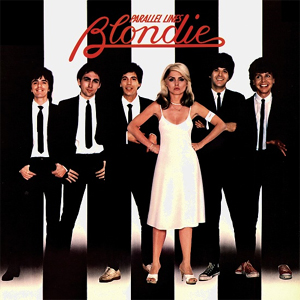
Blondie_-_Parallel_Lines

Last week I wrote about two carefully chosen words – Weather Report.  This time I want to write about a single, carefully chosen word.

Blondie is the name of an American rock band fronted by Deborah Harry.  According to Rolling Stone magazineBlondie has sold in excess of forty million records over the course of a career starting in 1974.

For a single word, Blondie has a lot to say.  First, there is the biographical background it reveals.  After graduating with an arts degree in 1965, Deborah Ann Harry worked at BBC offices in New York, then as a waitress, a go-go dancer and as a Playboy Bunny.  I don’t know if young Deborah found herself called Blondie at the BBC, but in her waitressing and dancing jobs, this was how men often refered to her.

The first thing to note about the name Blondie is the “ie” ending.  This sound often denotes something small, insignificant, playful, charming, as in cutie or sweetie.  The linguist Otto Jespersen has suggested that the effect of ie is to convey a childlike quality. Children tend to add an ie sound – one of the easiest to produce – at the end of words as they begin to learn language.  As a child struggles to master the tricky business of talking, there seems to be a natural tendency to return to the security of something easily managed.  In this way, the ie sound is associated with children.

So Blondie has this suggestion of something cute and childlike.  Those characteristics then collide with the reality of Blondie as a hard-hitting rock band. Blondie now takes on a different nature.  There is something tough in the name, a denial of intimacy and individuality. It’s a generic nickname for fair-haired young women, which while starting all cutesy in the nursery, has now taken us into seedy bars and clubs where superficial adult relationships are playing out.

Blondie1977

The music Blondie made is like a novel based on the short story of their name. Listening to my favourite Blondie album Parallel Lines, we meet Sunday Girl,  “as cold as ice cream but still as sweet.”   Heart of Glass, portrays a similar character. A glass heart suggests someone tough and unemotional, but also fragile and vulnerable .  In One Way or Another, a cold hearted girl is both a stalker making dark threats, and a playful little thing, giving you the slip in a game of hide and seek. There’s Pretty Baby – that ie sound again – about a young girl trying to separate the fantasies of romance from reality.  Picture This, apparently a love song, is actually a celebration of the vision of a loved one rather than an acceptance of their reality. Fade Away and Radiate , similarly, paints a picture of someone watching a film, who feels a deeper connection with a silvery screen goddess than with real people who mock her in daily life.  Finally, there’s a line in I Know But I Don’t Know, about how “I’m your dog but not your pet.” Blondie is a pet, a bunny, a cutie, the vision of a perfect, undemanding companion; but you’d be wrong to think that this pet isn’t an animal with teeth.

So there you are – Blondie, an album of songs in itself.

I Get The News I Need On The Weather Report

Weather_Report-Heavy_Weather

Weather Report were a jazz fusion band of the 1970s and 1980s.  As well as recording wonderful music, they came up with a band name illustrating the effort that has to go into finding just the right words.

In 1970, pianist Joe Zawunil, saxophonist Wayne Shorter, and bassist Miroslav Vitous, all luminaries of the jazz scene, decided to form a new band. They did not, however, have a name to describe themselves and their music. Zawunil, in an interview with Jazz Forum magazine, recounted how the three of them met at his New York apartment and went through countless names. They kept coming back to Daily News. Knowing this wasn’t quite right, the struggle continued, until Wayne Shorter pondering on the fact that news programmes always contained a weather bulletin, suggested Weather Report.

Weather Report is a better band name than Daily News because it is difficult to see a jazz band as a group of journalists. A clear story does not arise from free flowing music without lyrics. If a piece of jazz music were a news story, you wouldn’t be able to work out what was going on in the world that day. Daily News is too literal.

Weather Report tells a different story. The weather is vast and ever changing, benign, glorious, dull, violent. Our ability to understand and predict the weather is partial. It’s like listening to music. We’re aware of pattern and meaning there, which remains enigmatic, beyond our ability to fully comprehend.

275px-Michael_Fish_1987_storm_forecast

Weather bulletins always come after the news, a tacit admission perhaps that talking about weather is shorthand for talking about nothing important. Nevertheless, we might round all this up by remembering that, despite their position at the bottom of the news pile, weather reports can pass on information that will blow your house away. Music is harmless entertainment, and a force with enough power to move millions. It’s a breeze on a sunny afternoon and a landscape-changing storm.

None of this is in the Daily News; it’s all in the Weather Report.