Museum of the Year


V_And_A

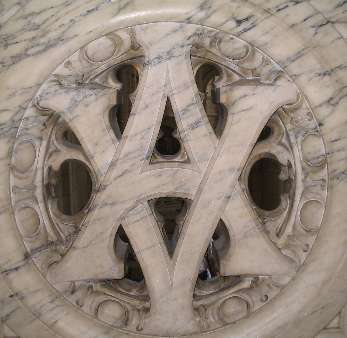
The Victoria and Albert Museum is one of the five short listed candidates for museum of the year. The V&A is an interesting museum for such an accolade. The V&A was originally dedicated to industrial design. In 1913 the scientific and industrial collection was taken to the nearby Science Museum, and the V&A was switched to its present role as a collection of decorative art. But even if we think of the V&A in terms of decorative arts, this does not lessen the significance of its collection. The history of art shows that there was always a stifling weight of expectation on areas of art considered important. For many centuries fine art was confined to churches and cathedrals, and its subject matter was limited by its religious setting. It was only in the decorative arts, with much lower expectations, that artists could widen their scope. During the Renaissance when art finally began to leave the Church, it was decorative art that led the way, with many famous artists engaging in this kind of work. The fifteenth century artist Botticelli, for example, painted furnishings for domestic use. I’ve seen one of Botticelli’s lovely laundry boxes at the National Gallery. A modern artist like Andy Warhol taps into this with his paintings of every day things – cans of beans and so on. So whether the V&A is the best museum or not, awards and a sense of importance can sometimes be a drawback. I’ll think about that next time I don’t get an award.

Lessons that Claudius has for us

Claudius crop.jpg

This week Angela Merkel, has had to appease the Turkish president Tayyip Erdagon, by attempting to prosecute a German comedian who composed a scurrilous verse or two about him. I gave this some thought over the last few days, reading Robert Graves’s I Claudius. I was reading the sections of the book where, following the death of the essentially decent emperor Augustus, his son Tiberius succeeds as emperor. Tiberius, thin skinned and insecure, passes a law  making it treason to assail his own honour and reputation in any way. People accused of writing impolite verse are put on trial for their lives.

Later in the book, there is a falling out between Tiberius and his formidable mother Livia. Taking revenge on her son, Livia arranges a party where she reads to her guests from a collection of letters written by her former husband Augustus. She takes bitter pleasure in shaming her son with the following passage:

“Though I have been bound to protect myself legally against all sorts of libel I shall exert myself to the utmost… to avoid staging so unpleasant a spectacle as a trial for treason for any foolish historian, caricaturist or epigram-maker who has made me a target for his wit or eloquence.”

Augustus concludes: “To use the majesty of the law for revenging any petty act of private spite is to make a public confession of weakness, cowardice, and an ignoble spirit.”

Not much has changed in two thousand years.

Writing lessons for Claudius

&Claudius crop


I’m reading I Claudius by Robert Graves. It’s a great book in many ways, not least in the education in writing that young Claudius receives from his teacher Athenodorus.   Claudius writes a description of a huge draft of army recruits parading on Mars Field for the inspection of Emperor Augustus.  Receiving criticism from his teacher, Claudius says:  “I was forced to admit that I had told both too much and too little…  I need not have mentioned that the cavalry had horses: people took that for granted.  And I had twice put in the incident of Augustus’s charger stumbling; once was enough if the horse only stumbled once… On the other hand I had not mentioned several things that he would have been interested to hear – how many recruits there were on parade, how far advanced their military training was, to what garrison town they were being sent, whether they looked glad or sorry to go, what Augustus said to them in their speech.”

I must avoid telling too much and too little.

The Business of Horse Racing

Lingfield_Park

April’s Grand National at Aintree has a prize fund of over £1 million, the greatest of any jump race in Europe. Horse Racing has always been unashamedly commercial, ever since rascally King Charles II used to disappear up to Newmarket in the 1670s to have a flutter on the horses. In fact the presence of high street bookmakers is down to horse racing. Until 1960 betting could only take place at race meetings, or via postal bookies who had a reputation for unreliability. This meant that punters who couldn’t attend meetings were likely to go to an illegal street bookie, who because you knew where they lived, were much more likely to honour bets than postal bookies. By 1960 the illegal street betting industry was so huge that the government gave in and legalised high street betting shops. But even with this commercial background, horse racing is still a sport, in the sense that it is about more than money. This is clear in the way many people involved in racing do not put financial profit as their top priority. Horse racing is often irrational as a way of making money. For many years race entry fees were used to provide prize money, which meant that race horse owners were competing mainly to win back their own money. It is also the case that owners have nearly always spent more on their race horses than they earned from them. By the 1960s, prize money on average only contributed 23% of the total costs of ownership (figures quoted by sports historian Wray Vamplew). Most owners lose money, but are willing to bare these costs for the prestige of being involved in the sport. In the 1830s a third of owners were titled. Today the nobility have been replaced by super rich business people, who don’t seem to care about the costs of participation. For them sport is on a different plane to normal laws of profit and loss. The age of the gentleman amateur might appear to be over in sport. And yet some of the most prominent people in horse racing, the most unashamedly commercialised of all sports, don’t do it for the money.

Libraries Making History

Library_Closed


In the last six years 343 libraries in Britain have closed, according to the BBC. A further 111 closures are planned for this year. When I was growing up, the library was one of my favourite places. I used to go to the now closed Kent County Library, a wonderful circular building, with an orbiting balcony where you could sit in alcoves made of books and read for hours.

Not only do libraries have a long history, they in fact mark the beginning of history itself. Clay tablets written in cuneiform script have been found in temple rooms in Sumer, modern day Iraq, dating back to 2,500BC. These temple rooms were the first libraries, and also marked the end of prehistory for which we have no written records, and the start of history, when people started to write things down. The symbolic power of libraries was not lost on the Romans, who established the first public libraries. Roman emperors tried to outshine their predecessors by opening more and bigger libraries. Into the modern age, the Public Libraries Act of 1850 was a symbol that universal literacy had arrived. Libraries stand for learning, social justice, and civilisation itself. Against this sort of background it is not surprising that the loss of libraries stirs passions. Whether it is the Library of Alexandria burning down or Heaton Library in Bradford closing, the sense of loss is similar. But as someone who loved a library, I cannot help but feel that their loss is inevitable. I love my tablet and the way I can access books so easily, and then access information within the books, via online dictionaries and explanatory articles. I love the way I can change text size and page colour to suit my eyes. More than that I love the fact that with modern technology, a library no longer has to be a building. Wisdom has never actually been confined to certain people or places, and today we see the proof of that more powerfully than ever before.


The Sacred Bouncing Ball


Tepantitla_mural,_Ballplayer_B_Cropped


The death of the great Dutch footballer Johan Cruyff gives confirmation, if any were needed, that football has for many people an almost sacred position in modern life. This reverence has a long history. Football in one form or another dates back to the earliest civilisations. Early kicking games developed in China, and among Australian aborigines. But according to football historian David Goldblatt there is no evidence that these ancient games were central to peoples’ lives. For a society that placed football, or at least variants of it, in an important social role we have to go to the ancient civilisations of South and Central America. It seems that for over 3000 years football games were important to the Aztecs and Mayans.

This continued up until the sixteenth century when Spanish invaders made their disastrous arrival. A major factor in the ancient South American game was the development of a hollow bouncing ball, made with rubber derived from trees. In most circumstances objects are inert. When a stone is thrown on the floor it stays there. A rubber ball, by contrast seems to have a life of its own in the energetic way it bounces back. Archeological fragments suggest that rubber ball manufacture began as early as 1500BC, with team ball games emerging by 1200BC. Most of these involved keeping a ball off the ground, or only allowing a set number of bounces, a kind of volley ball. Other variants had targets through which a ball had to pass. Whatever form these games took, the ball had a central place in South American life and culture. The Mayans even had a creation myth, the Popul Vuh,which described the sun and the moon as divine ball players. Perhaps you could say that Johan Cruyff was a modern expression of this ancient reverence for the ball and those who can control it.

The image at the top of this article shows an ancient South American ball game in progress – from the Tepantitla murals in Teotihuacan, Mexico.  (Photo by Daniel Lobo)

The Long History of Disneyfication

Merlin's_Cave

The site of Tintagel in Cornwall has seen some controversy recently. A local councillor has complained about the decision by English Heritage to commission a carving representing Merlin on the cliff near a cave entrance linked to the legend of King Arthur. This carving, apparently amounts to “Disneyfication” of the site. The first thing to say is that early photos released of the carving seem to have made it look much bigger than it actually is. The second point is that Tintagel’s new carving actually taps into an artistic practice that goes back much further into history than the Disney company. Leroi Gorman has suggested that stone-age people often used caves as dramatic galleries for their art. In two cave systems in France, there are a series of cave paintings and sculpture that follow a difficult river route. The idea is that the struggle necessary to get through the cave to see the art was part of an overall emotional effect. There are suggestions that this kind of “cave experience” was used as training or an initiation ritual. Maybe the best way to view Merlin’s carving at Tintagel is as an echo of those cave experiences created by man thousands of years ago. English Heritage says the carving is part of a planned scheme for a number of artistic installations to explore the history of the site. Ancient cave art was similar in its aims.

Lindisfarne and Europe 1972


Lindisfarne-FogOnTheTyne

“The fog on the Tyne is all mine,” sang Alan Hull. It was 1972 and Lindisfarne’s Fog on the Tyne was top of the UK album charts. This was the year Edward Heath’s government was preparing to take Britain into Europe for the first time. Naturally there was much argument. Pro-Europe Edward Heath managed to get a majority of his MPs to support him, though the Labour Party was opposed. This opposition led to the resignation of Labour’s deputy leader Roy Jenkins, who was in favour of supporting Heath’s efforts. The pro-Europe lobby managed to prevail through all this turmoil, and the European Communities Act was passed in October 1972. Britan entered the European Economic Community the following year.

Meanwhile Alan Hull was singing that the fog on the Tyne belonged to him. This of course was not meant to be taken seriously. The fog on the Tyne cannot really belong to anyone. But ironically, it is only something that belongs to no one in particular than can belong to everyone. With issues of nationalism and identity in the air, Alan Hull was making his statement about how a feeling of belonging can be combined with an open hearted view of the world. The Tyne was a place of trade, where different people came together to share what they have. Ships from overseas sit at the quayside on the charming album cover. It seems that people of all kinds might go there, and feel a sense that the Fog on the Tyne could belong to them.

From http://www.infobritain.co.uk

Festival of Britain

Festival_Of_Britain_Girls

From http://www.infobritain.co.uk

My mother-in-law shared a wonderful photo this week of a group of Kent girls dressed up to celebrate the Festival of Britain in 1951. This was a major event designed to celebrate Britain’s recovery from the Second World War. Sadly little of the Festival remains. With the exception of the Royal Festival Hall, the complex of buildings erected for the event on London’s South Bank has not survived. Unfortunately the Festival became a political issue. Organised by Clement Attlee’s post war Labour government, there was vigorous opposition from the Conservatives. Winston Churchill declared that the project was an expensive exercise in socialist propaganda. As soon as the Conservatives returned to power, in October of 1951, work started to demolish the Festival site. Today such an attitude seems incomprehensible. We have large-scale public events, the Millennium celebrations, or the London Olympics for example, which are not seen as socialist propaganda. You could make a point that perhaps today we have a greater acceptance of government organisation of life. But that’s not really accurate. There were massive public events in the nineteenth century, the Great Exhibition of 1851 for example, which left us the legacy of the museums in South Kensington. The truth is the Festival of Britain was a huge success enjoyed by many. There were ten million paid admissions over a period of five months. An incoming government did not like having a symbol of such success sitting in the middle of London. It had to go. But Jean’s photo is a small reminder of a great occasion.